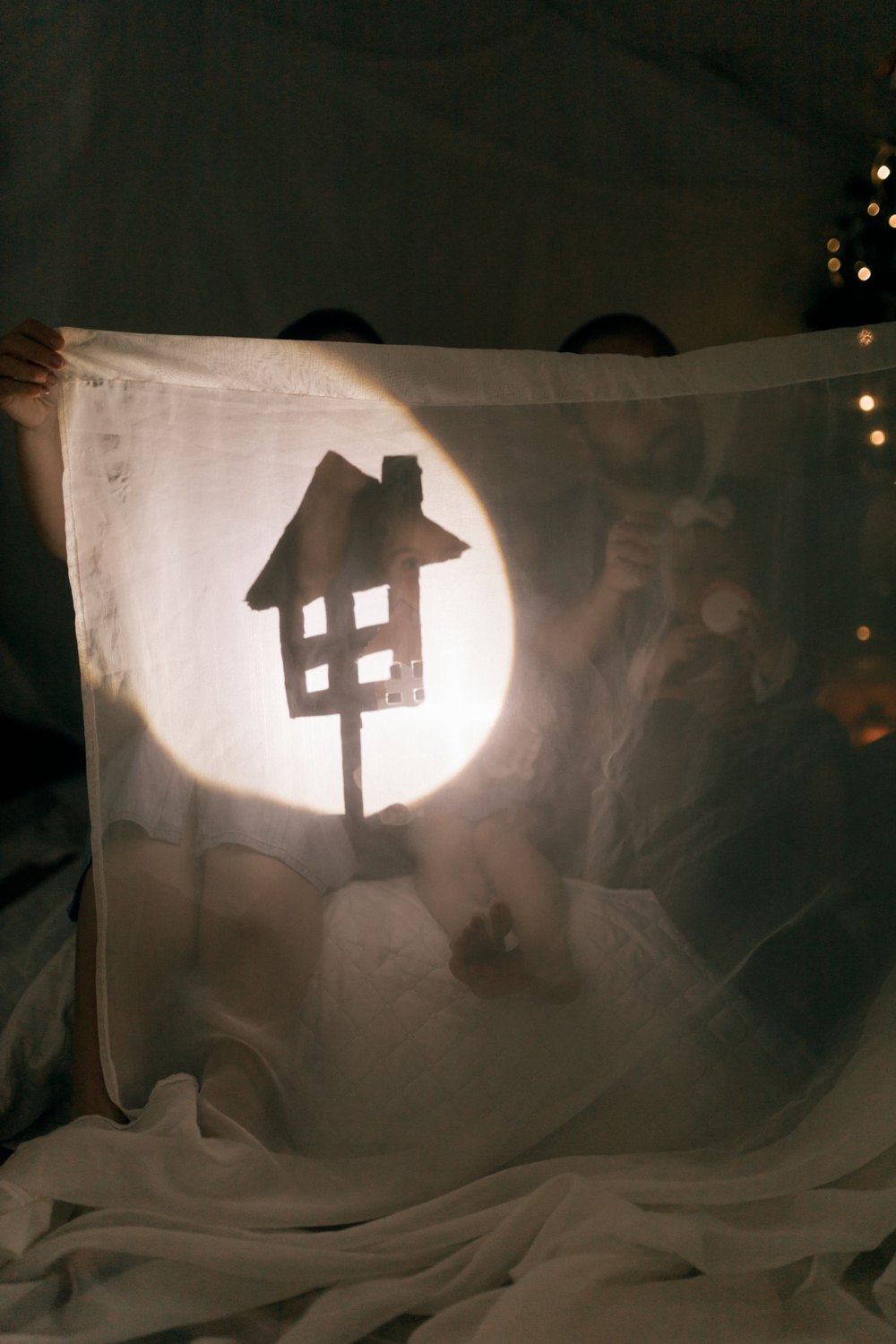
In shadow theatre, a character is recognised mainly through its outline rather than painted colours. A simple scene can therefore grow from only a few shapes. Before developing a story, test the relationship between the light, figure and projection surface.
Test the arrangement first
Use a suitable, stable light source according to its instructions and keep materials away from heat sources. Candles are unnecessary for this small craft setup. Choose a light-coloured surface or suitable screen on which the shadows can be seen.
First place one simple shape between the light and surface. Carefully vary its distance and observe size and outline. The exact effect depends on the arrangement. Mark a useful position so that the stage can be restored after a break.
Check from the audience’s position. Are unwanted objects visible, and is the intended movement area clear? Cables and stands must not obstruct walking routes. Adults should arrange a suitable setup and supervision when children participate.
Design the shape before decoration
Cut out, for example, a bird with a clear beak and a tree with a distinctive crown from suitable paper or card. Tiny details may disappear in shadow. Test each figure in the actual light before adding more detail.
Arrival, encounter and departure are enough for a first scene. The bird lands in the tree, searches for a place and flies away. Decide which movement makes these stages visible. A short pause can show a character noticing something.
Change a shadow’s size deliberately. Moving a figure closer to the light may alter its appearance. This can be used creatively but should not accidentally accompany every movement.
Add sound after the visible action works
Perform the scene once without words. If the sequence is understandable, add narration or sounds you make yourselves if desired. A rustle can accompany a movement without filling every moment.
Ask one viewer to describe only what they recognised. This reveals whether the silhouette and action communicate clearly. For a second version, change one thing: a clearer outline, a slower entrance or a different ending. Store successful figures flat so that their shapes survive until the next performance.