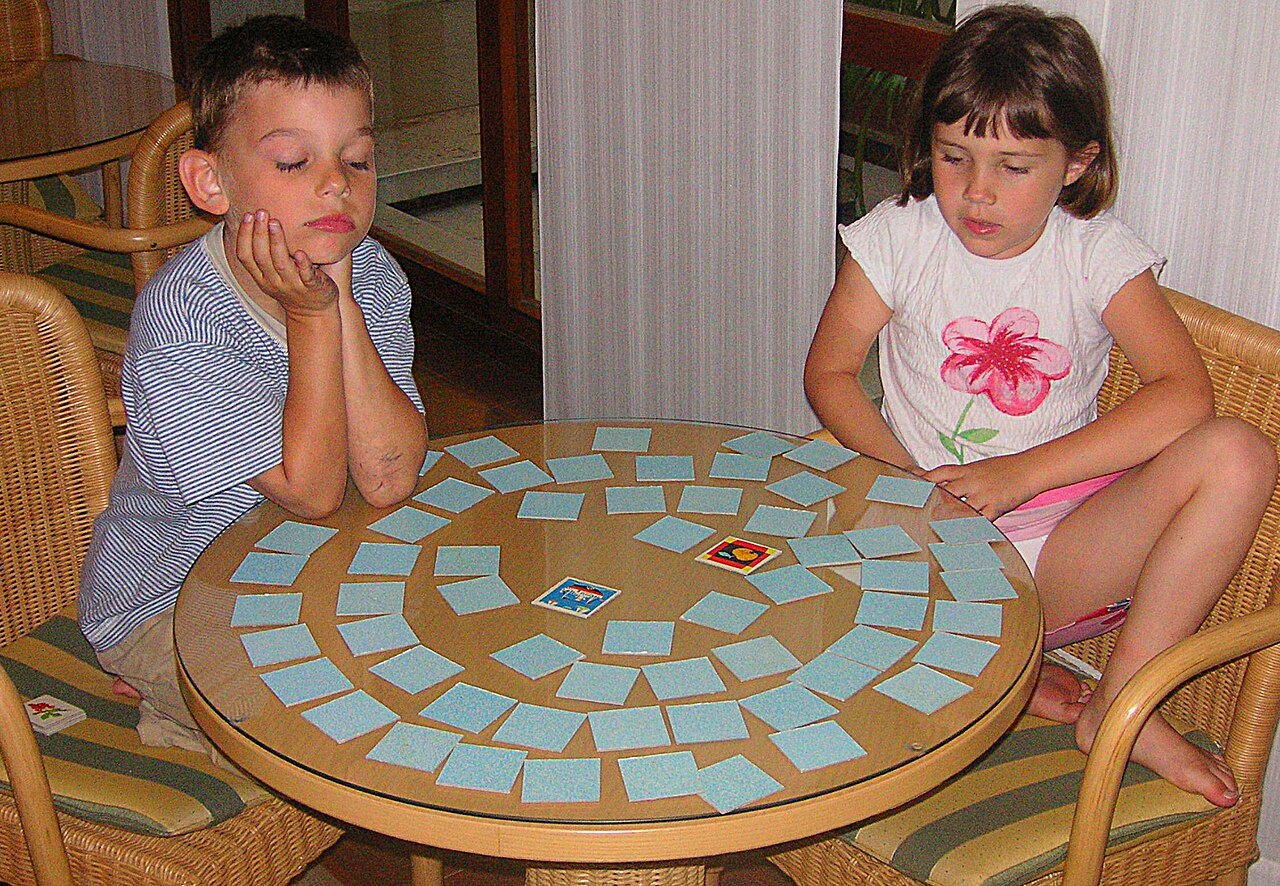
Two matching pictures are hidden somewhere in a layout. The task sounds simple, yet even a modest number of pairs requires attention. A memory game connects recognition of an image with recollection of its location. If cards drift during play or positions become unclear, the task grows unnecessarily difficult and partly random.
Create a stable layout
Place cards with small gaps in recognisable rows. This is an understandable arrangement of the components rather than an additional memory aid outside the game. Nevertheless, check the actual rules if they specify a freely scattered layout. Whatever the arrangement, revealed cards should return to precisely the same positions.
Everyone needs a reasonable view of each image. Avoid turning a card briefly towards only the active player. A shared moment before concealing it again helps people sitting at different angles. Reflections and hands covering the picture do not create a particularly interesting additional challenge; they simply give players unequal information.
Remember a few deliberate anchors
Initially, avoid trying to memorise every position perfectly. Retain a few clear anchors, such as an animal near the upper left or a red vehicle close to the centre. When its partner appears, there is a specific connection to make. A verbal description can help, provided speaking aloud is consistent with the agreed rules.
Watch other players’ turns too. Information remains relevant even when somebody else is acting. At the same time, nobody needs a running commentary on every missed pair. Friendly silence gives players the opportunity to retrieve a memory for themselves rather than being coached through the task.
Adjust the size of the challenge
A short learning round can use fewer pairs if everyone plays with the same selection. Reducing the layout changes difficulty more directly than adding a frantic time limit. In mixed-age groups, adults are not guaranteed to win. Treat the outcome as a game result rather than an assessment of somebody’s general ability.
Avoid promising that a particular session will improve memory overall. What you can directly observe is performance on this specific task. Afterwards, ask which memory cue helped and whether the next layout should remain the same size. That allows the challenge to change without turning a shared game into a test of personal worth or intellectual capacity.