
A game box can look tidy while still requiring a lengthy search at every setup. Putting all small cubes together helps little if each player needs a particular starting set containing several shapes and colours. Useful storage follows the actual process: what is shared, what belongs to one player and what stays in the box for certain variants?
Sort backwards from setup
After playing, group components as they will be distributed at the next start. Personal starting materials can have individual bags, while shared supplies remain separated by use. Label similar groups briefly and clearly. A label should still make sense after several months without requiring you to remember an improvised abbreviation.
Separate expansions and special scenarios from the base materials wherever the rules permit. One additional card in the wrong deck can change a game even when the box appears complete. Keep component lists or sorting instructions when they help reconstruct the correct selection for the next session.
Avoid pressure and movement
Before closing, check whether tall compartments press against cards or the board. A lid that closes only with force suggests an unsuitable arrangement. Card sleeves increase stack size and may make an insert that previously fitted no longer usable. Test the complete packed box rather than only an empty compartment.
If games stand vertically, carefully check which components move inside them. Closed bags or fitted lids help more than open trays designed to remain horizontal. Avoid tight rubber bands directly around cards where they put pressure on the edges. Storage should protect pieces as well as keep them together.
Consider the shelf itself
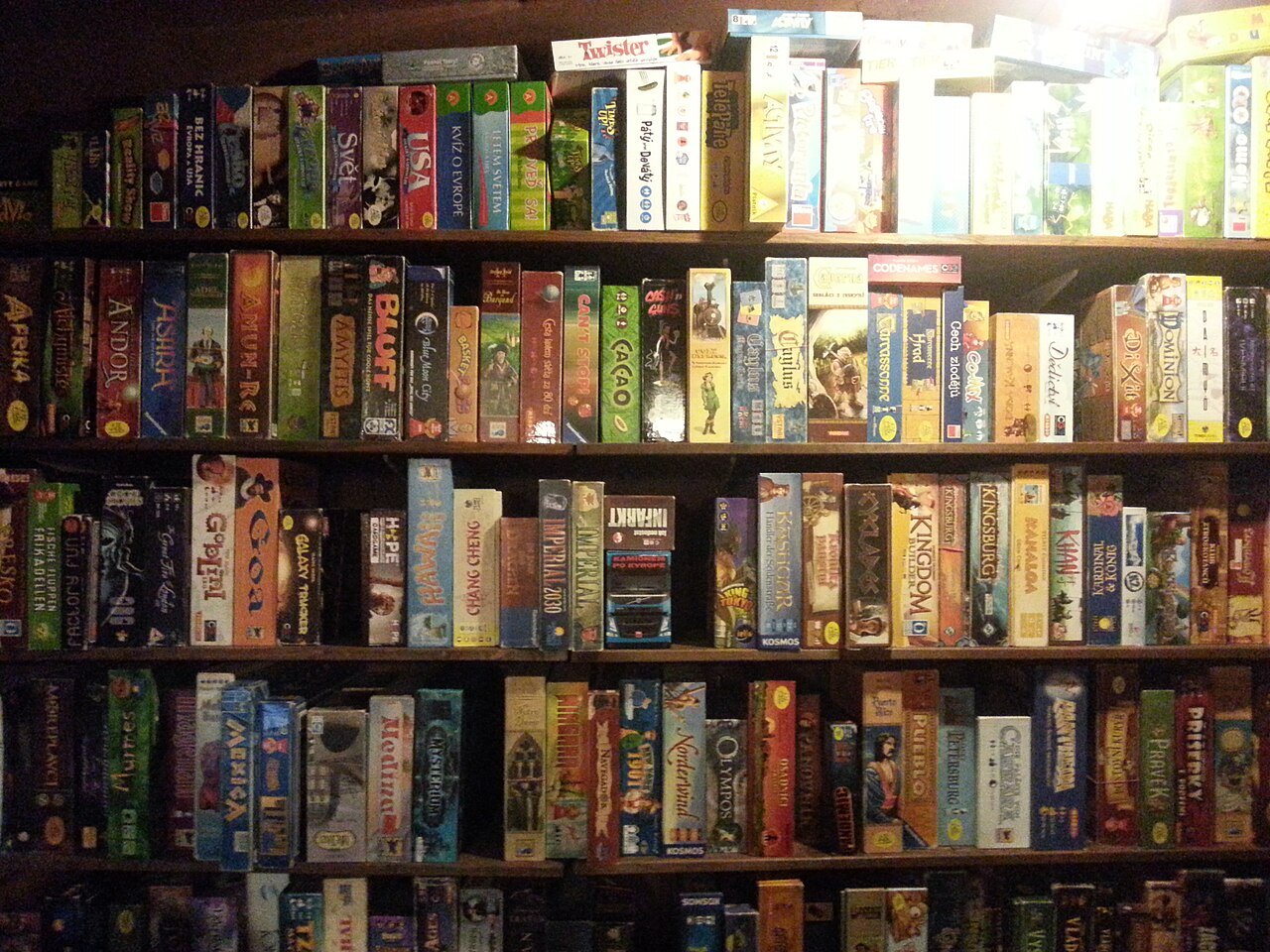
Choose a dry location with reasonably stable conditions and without persistent direct sunlight. Do not stack heavy boxes on delicate small cartons. The shelf should support the real weight and allow a game to be removed without pulling several others down with it.
After packing, scan the table and floor for stray pieces. A brief completeness check can prevent an interrupted game later. For a frequently shared collection, a simple list of borrowed games and returns is enough. The most useful system is one people can reliably maintain during ordinary cleanup, rather than an elaborate arrangement abandoned after its first use.