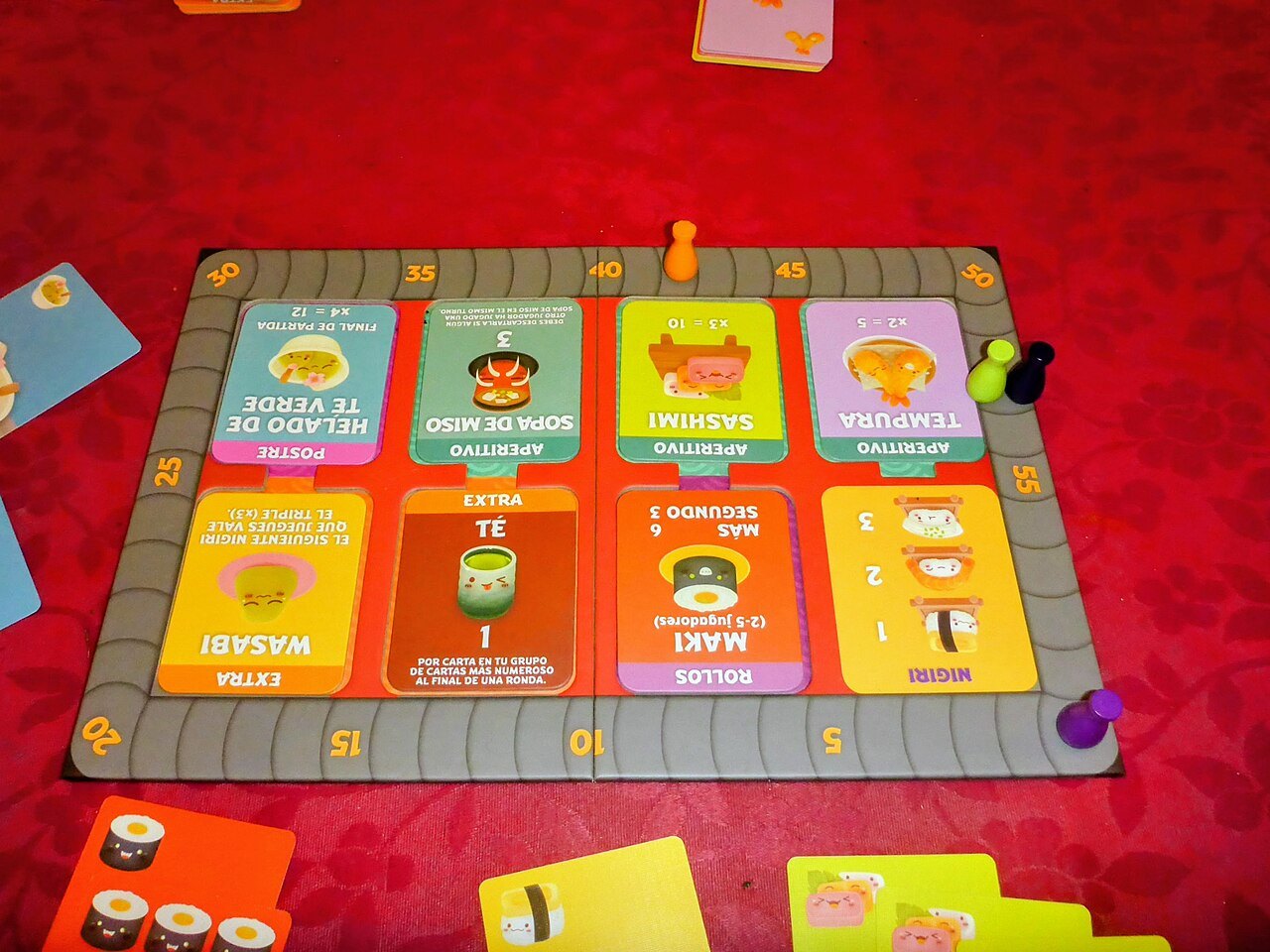

A hand of cards moves around the table after everyone selects something from it. This procedure is commonly called drafting. The simple movement creates a distinctive decision: whatever you keep is missing from the selection passed onwards. You can therefore consider both your own developing collection and the opportunities travelling towards other players.
Explain a complete pass
Sushi Go provides an accessible example of selecting and passing cards. Use the edition on the table for the exact hand size, direction and scoring details. Explain first when players choose, reveal and pass. Simultaneous selection must not accidentally become a sequence in which later players already know everybody else’s choices.
A small open hand is enough for a demonstration. One person selects a card, places it as required and passes the remainder. Explicitly show that players do not keep the same hand while exchanging a single card. Beginners may need this distinction more urgently than a complete explanation of every possible scoring combination.
Personal value and denied opportunities
Suppose one card completes your modest collection while another appears likely to give the next player a large reward. The first choice develops your own position; the second may limit somebody else’s. Which makes sense depends on the actual values and the state of the game, rather than a fixed rule always to help yourself or always to block.
Taking a card solely out of irritation rarely explains a strong move. Consider what you sacrifice by doing so. You may also be uncertain about another player’s concealed objectives or future cards. Observation is useful, but an apparently obvious plan remains an estimate until the relevant information becomes public.
Read hands that return
If hands return after travelling around the table, missing cards can indicate earlier decisions. Initially, follow only one or two relevant patterns instead of trying to memorise every card. The important question is whether your developing plan can still be completed with the opportunities likely to remain.
If a required card never arrives, move towards a workable alternative in time. Drafting often rewards adjustment to a restricted selection. An idea that looked promising three passes ago does not have to be pursued until the end. Afterwards, reconstruct one hand together and compare which choices would make sense for different collections already on the table. That exercise reveals why the same card can have very different values.