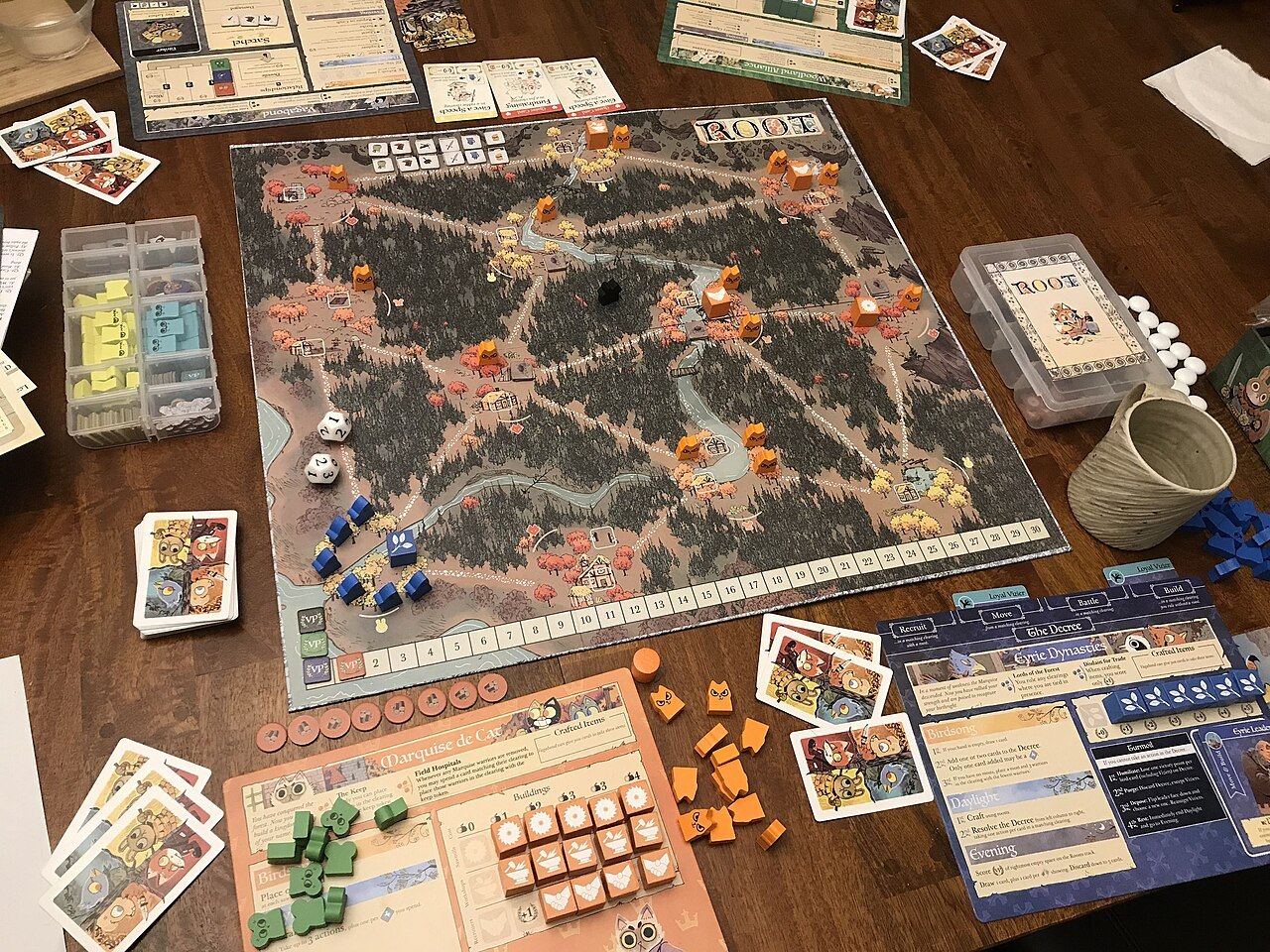
Not every minute outside your own turn is wasted. Watching an opponent make an important decision can be absorbing. Waiting becomes uncomfortable when other turns add nothing to your understanding, or when you must reconstruct the entire situation only after somebody calls your name. Before labelling a player slow, examine the process around the whole table.
Distinguish the causes
A newcomer may need time to read symbols. An experienced player may be calculating many alternatives. Somebody else may simply be waiting for a player who has not clearly ended their turn. These situations require different responses. A reference sheet helps with reading; a clear “finished” clarifies the handover. Repeated demands to hurry solve neither problem.
The changing game state can also prevent preparation. If every action completely replaces the available cards, nobody can realistically have a final decision ready in advance. Instead, players might keep two possible objectives in mind and choose between them when their turn arrives. Preparation should match the information the game actually leaves stable.
Simplify small procedures
Place shared supplies where people can reach them without standing or asking what is hidden behind a bowl. Separate used pieces from available ones. Announce when a turn ends, especially where several optional side actions are possible. These adjustments speed up handling without restricting the decision that makes the game interesting.
During a rules question, one person can look up the exact wording while the active player considers other options. This works only if the unresolved rule does not affect those options. Continuing several turns on an uncertain assumption can create a much longer interruption later, when pieces and information have to be reconstructed.
A timer is not always the answer
A time limit changes the experience and may put some people under additional pressure. Introduce one only with agreement, preferably through a variant the game already supports. For a social evening, choosing a game with simultaneous decisions may be a better response to persistent long pauses than policing each individual turn.
After making a change, notice whether waiting has actually become more comfortable. Speed is not an objective in itself. If everyone is interested in the development of a combination, that turn can take time. If nobody else remains involved, consider a different player count next time or a game that gives people meaningful decisions outside their own turns.