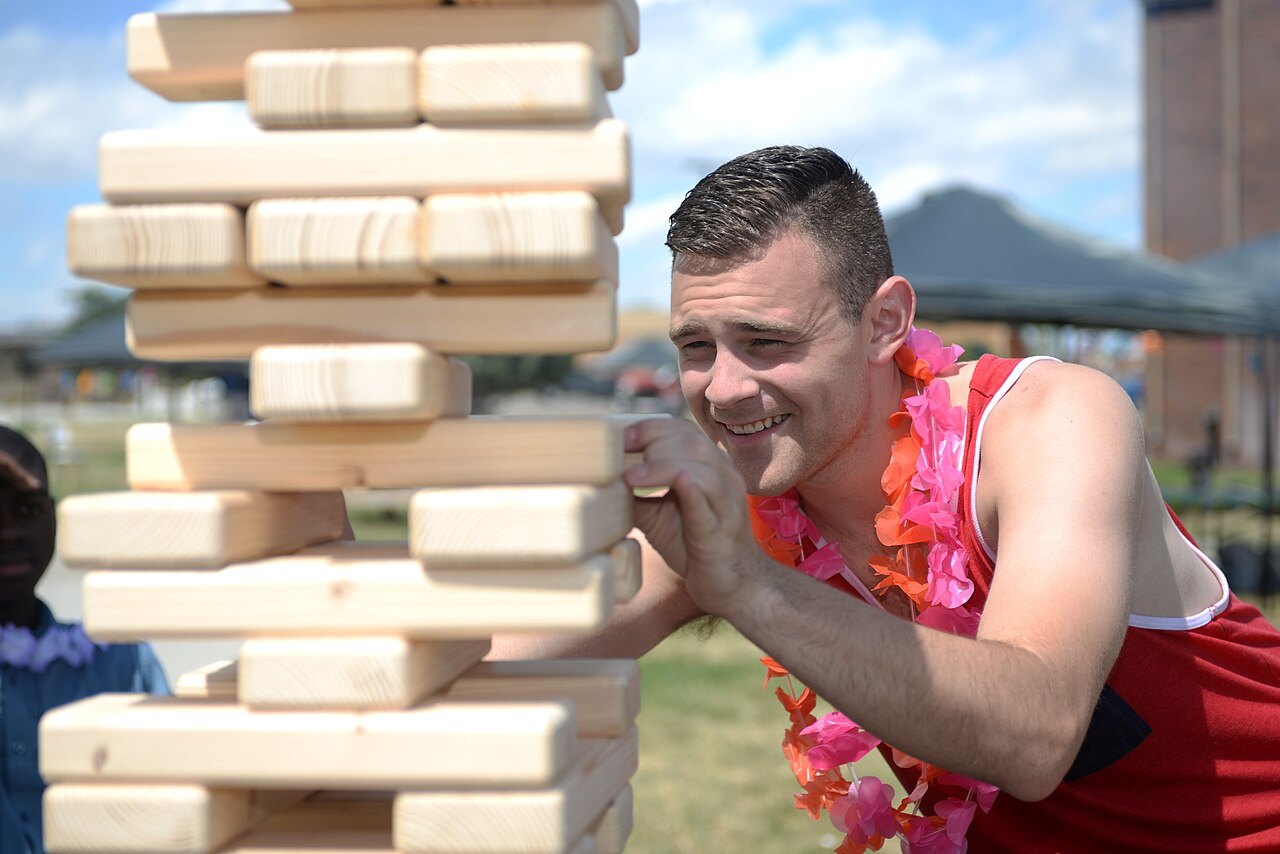
A wooden block must be pulled from a tower, or a disc flicked towards a target. Dexterity games move part of the challenge from planning into controlled movement. A stable setup makes that task meaningful. A shaking table or an area somebody can barely reach should not determine whose turn fails.
Check the playing area first
Choose a firm, level surface and remove objects that a falling tower could damage. Games involving sliding or airborne pieces also need a clear surrounding area. Follow the manufacturer’s age and component guidance, particularly where small pieces are involved. The space should suit what the game actually asks players to do.
Everyone should reach the relevant area without accidentally touching other pieces. If one seat creates an obvious advantage, players can change places between rounds. Rotating the entire setup during a turn is different and should happen only when the rules or an agreement made beforehand allow it.
Define what counts as an attempt
Establish whether a piece may be touched or tested first, which hand can be used and when a turn is complete. Releasing a piece may be decisive in a tower game, while a flicking game may define the finger movement itself. Use the rules of the particular game rather than importing a familiar rule from somewhere else.
A harmless demonstration with a few pieces helps during the first round. Show a valid attempt and one typical mistake. A lengthy description of finger angles cannot replace seeing the movement. Afterwards, let players develop their own sense of weight, friction and distance through actual attempts.
Agree adaptations openly
Motor abilities vary. Ask what adjustment would help instead of taking hold of somebody’s hand without invitation. A nearer starting point, a different tool or a cooperative objective may be useful, but it can also change the competitive task. Describe the adaptation openly and agree it together before treating the results as comparable.
Spectators affect the task too. Knocking the table or deliberately startling somebody at a crucial moment is not neutral observation. Agree on quiet when it is needed. After a mishap, clear the area safely before discussing the result. The next attempt should begin under the same understandable conditions rather than among scattered pieces and an unstable setup.