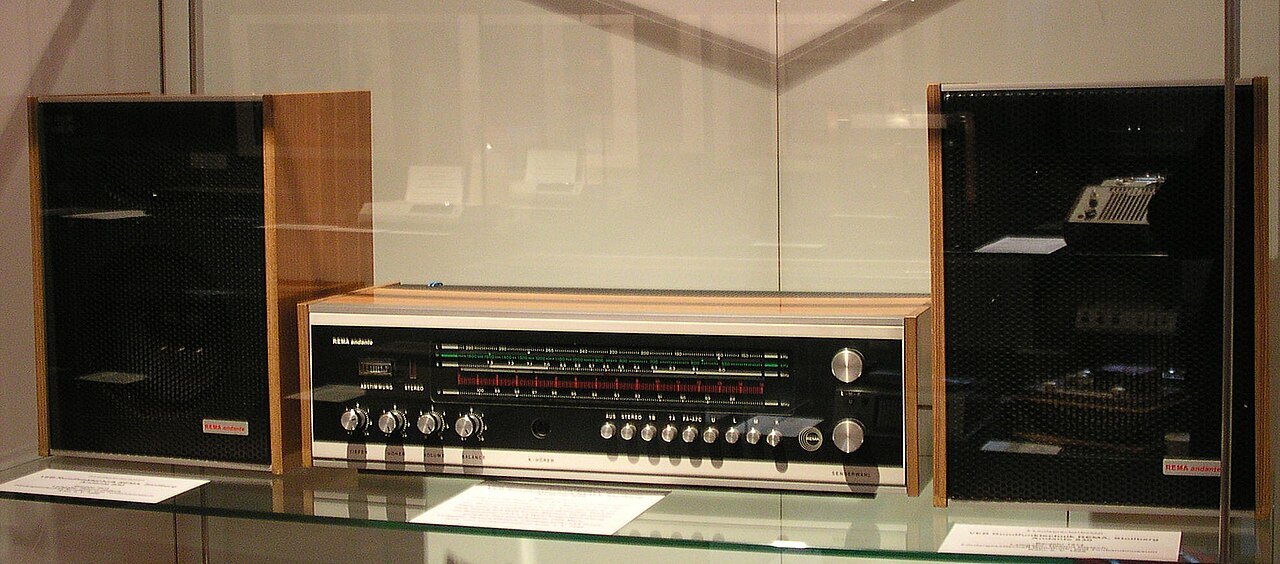
With two speakers, much of the spatial impression comes from their relationship to the listening position. One standing freely and the other deep in a corner may sound different despite being identical models. Begin with an understandable arrangement and a familiar recording. New equipment is not the first necessary response to an unclear stereo centre.
Use a triangle as the starting point
Initially arrange the speakers as symmetrically as possible around the main listening position. Similar distances from each speaker to the listener provide a useful starting point. Follow manufacturer guidance for orientation. Suitable height and aiming depend on design; not every cabinet can be turned horizontally without consequences.
Check whether furniture or other objects obstruct the direct path to the listener. A speaker behind a sofa back is not comparable with an unobstructed partner. Record positions well enough to return to the starting arrangement after an experiment.
Genelec's placement guidance explains principles including symmetry and room interaction. Studio examples are useful, but specific wall distances or adjustments do not automatically apply to every living room and speaker. Use the instructions for your own model.
Compare using a voice
Choose a familiar recording with a clearly centred voice and listen at a moderate unchanged level. Does the voice appear between the speakers or noticeably to one side? Check balance settings and matching connections before moving large furniture. Recordings may intentionally place a voice off centre, so compare a second source if uncertain.
Then change only one variable, such as toe-in. Replay the same passage. More or less inward aiming can affect the centre, high frequencies and side seats differently. The most appealing position for one listener need not be the best arrangement for several people.
Different proximity to walls can particularly affect lower frequencies. If one side sounds noticeably fuller, compare the surroundings. Do not immediately compensate with extreme tone settings. Improving placement may address the cause more directly.
Record the chosen compromise
After testing the centre, listen from the other usual seats. Briefly record which change improved which impression. A photograph and two distance measurements are often enough to restore the arrangement after cleaning or moving furniture. If a room constraint remains, acknowledge it: open shelving and a wall on only one side do not disappear through a supposedly perfect triangle.