Verse, chorus and bridge are useful names when they make listening more precise. They become obstacles if every change must immediately fit a fixed category. Begin with what actually returns: a melody, words, an accompaniment pattern or a combination of these. Only then ask what role the section plays in the progression.
Mark returns without naming them immediately
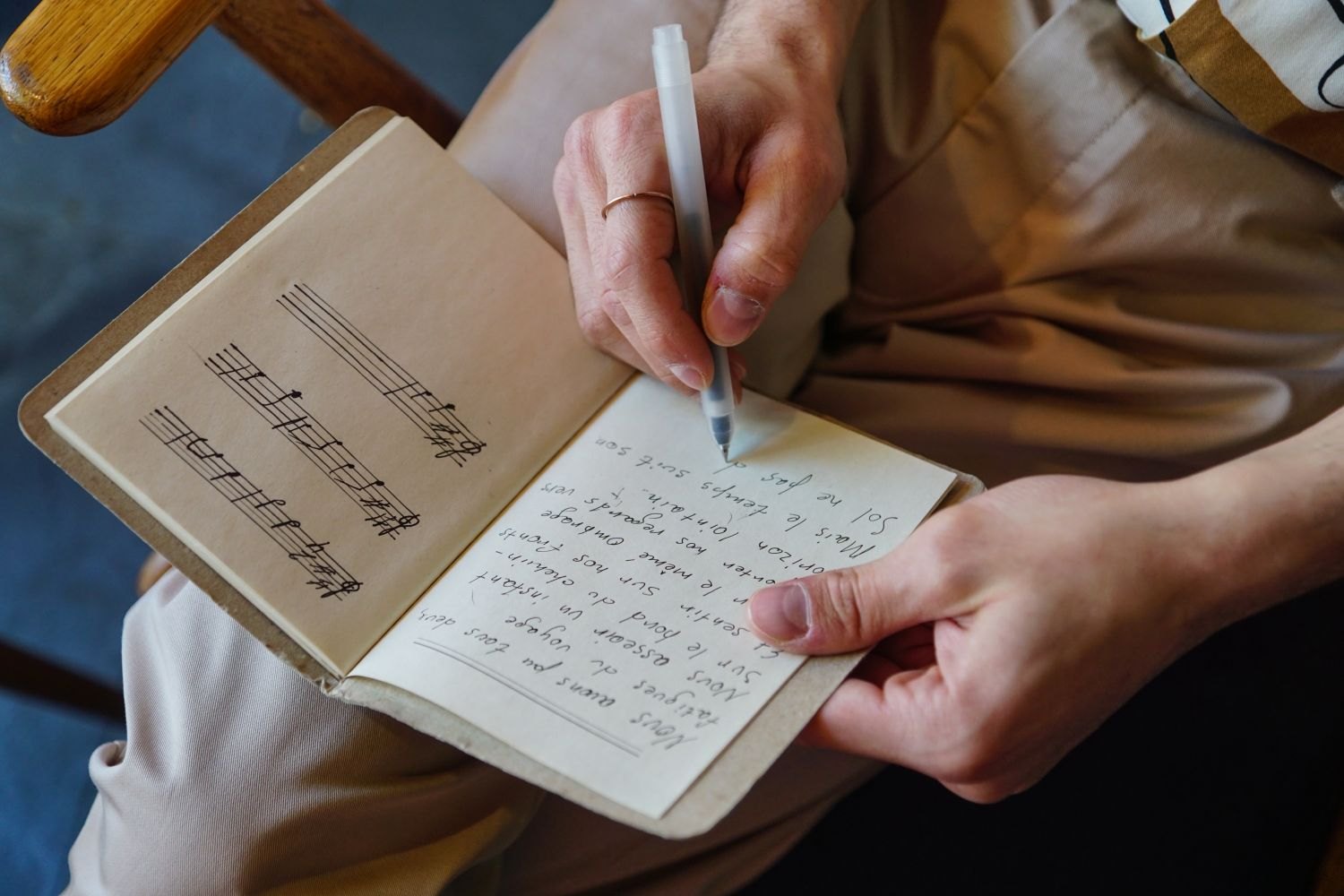
Listen to a familiar song and write a letter whenever a clearly new section begins. Call the first section A and the next B. When familiar music returns, use the same letter even if the words change. This sketch is not a score; it simply records where you hear repetition and alteration.
A verse often presents new words over recurring music. A chorus commonly returns with more closely repeated words and musical material. These are clues rather than requirements every song must satisfy. One repeated line at the end of a verse is also not necessarily a large, independent section. Listen for the musical boundary as well as familiar words.
Ask what changes in the new section
When something different follows several familiar alternations, examine the contrast. Does the melody change, the accompaniment shift, the harmony move differently or the lyric take another perspective? A bridge can provide such a contrasting section. OpenLearn's course examines it in relation to the preceding music rather than relying only on a new line of text.
A pre-chorus has another typical function: connecting verse and chorus, potentially returning on later cycles. OpenLearn distinguishes this connecting role from the bridge. If the labels become confusing, consider position and recurrence first. A section repeatedly preparing the same transition does a different job from a one-off contrast later in the song.
A possible form with an apparent exception
As an invented listening model, imagine A–B–A–B–C–B. If A brings new words over similar music and B returns with the same words, verse and chorus are plausible labels. C may supply contrast. The letters remain provisional, however. If the final B has no singing, its musical return can still be clear. Renaming it completely merely because the words are absent may obscure that relationship.
Another difficulty arises if a short rising passage precedes each B. Initially it may seem like the chorus opening. Compare both occurrences: does it have its own melodic shape and consistently finish where the same B material enters? It may be worth marking separately as a possible connecting section. The decision need not be final immediately.
In discussion, retain two sketches and identify the boundary where they differ. This is more precise than arguing about terminology without referring to the same passage. Finally, hear the joins again without letters. A useful analysis explains perceived relationships rather than replacing the song's movement with rigid labels. If your sketch hides a return you clearly hear, revise the sketch instead of assuming the music has broken a rule.
Check the sketch against the whole piece
After listening, examine the sequence of letters. Has a later section returned with a change? You can mark it as a variation of A rather than automatically inventing a new section. A denser arrangement does not necessarily turn the same melody into a new formal unit.
If identification remains uncertain, describe the audible change directly: after the second return, the voice drops out and an instrument takes over the motif. This is useful without a definitive technical label. Names help compare forms, but cannot replace the actual progression. The most useful sketch is one that lets you recognise the significant transitions when you listen again, including places where the song resists the pattern you first expected.