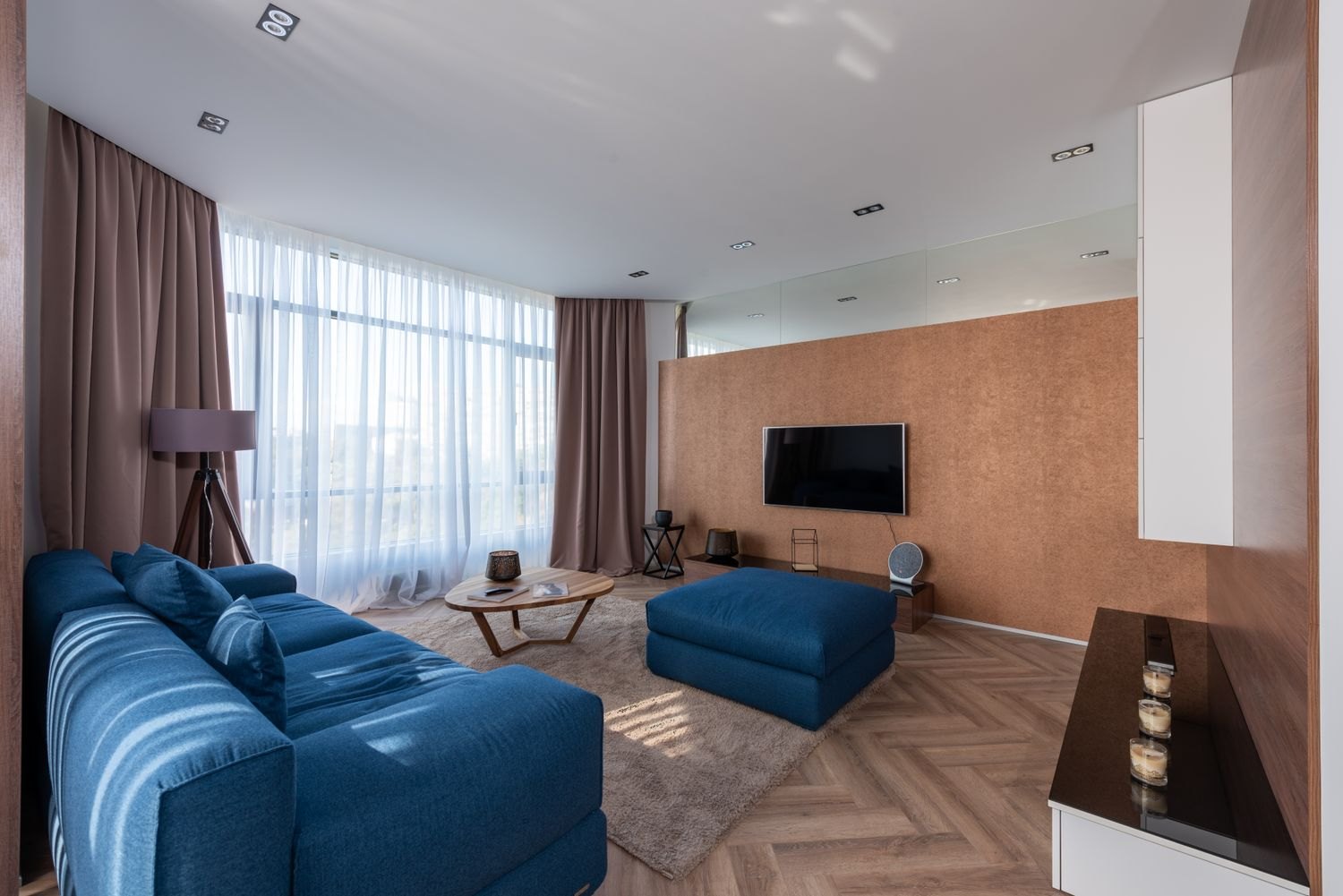
A living room containing many hard surfaces can make speech and film audio seem less clear. That does not automatically indicate poor speakers. Sound also reaches listeners through reflections from walls, floor and furniture. Before planning substantial changes, distinguish this from sound travelling into other rooms. Reducing reverberation is not the same as complete sound isolation.
Begin with a familiar signal
Listen to a familiar speech recording at an ordinary level and compare two seats. Does speech become clearer nearer the speakers? Does a particular room direction stand out? Such observations help assess the room's contribution. A brief handclap may reveal obvious ringing but does not replace measurements across frequencies.
Note whether the concern mainly affects speech, bright high-frequency content or individual low notes. This distinction matters. A rug affecting certain early reflections does not automatically solve a bass problem. A general diagnosis of too much echo can hide different causes.
Compare one manageable change
First examine speaker and seating positions. A speaker beside a large reflective surface may behave differently from its partner. Existing textiles such as curtains or a rug can then provide a comparison. Replay the same passage at the same level without simultaneously changing tone controls and placement.
The effect depends on material, area, position and frequency. Thin fabric is not a general absorber across the entire audible range. Avoid promises that one decorative element will solve the room completely. It may nevertheless produce a specific improvement you can identify through comparison.
Genelec emphasises that automatic calibration cannot remove every room-acoustic problem. Measurement and targeted treatment may help with more demanding issues. Ask which observed problem a proposed measure addresses and how its result will be checked.
A different objective needs different measures
If the main concern is neighbours hearing playback, the issue involves transmission through the building and potentially other paths. A less reverberant room does not guarantee quiet next door. Lower playback level, reduced low-frequency energy or headphones may change a particular evening but do not replace assessment of the building.
Record observations separately: clearer at the listening position differs from quieter outside the room. This lets you judge measures against the correct objective instead of buying something well described that addresses a different problem.