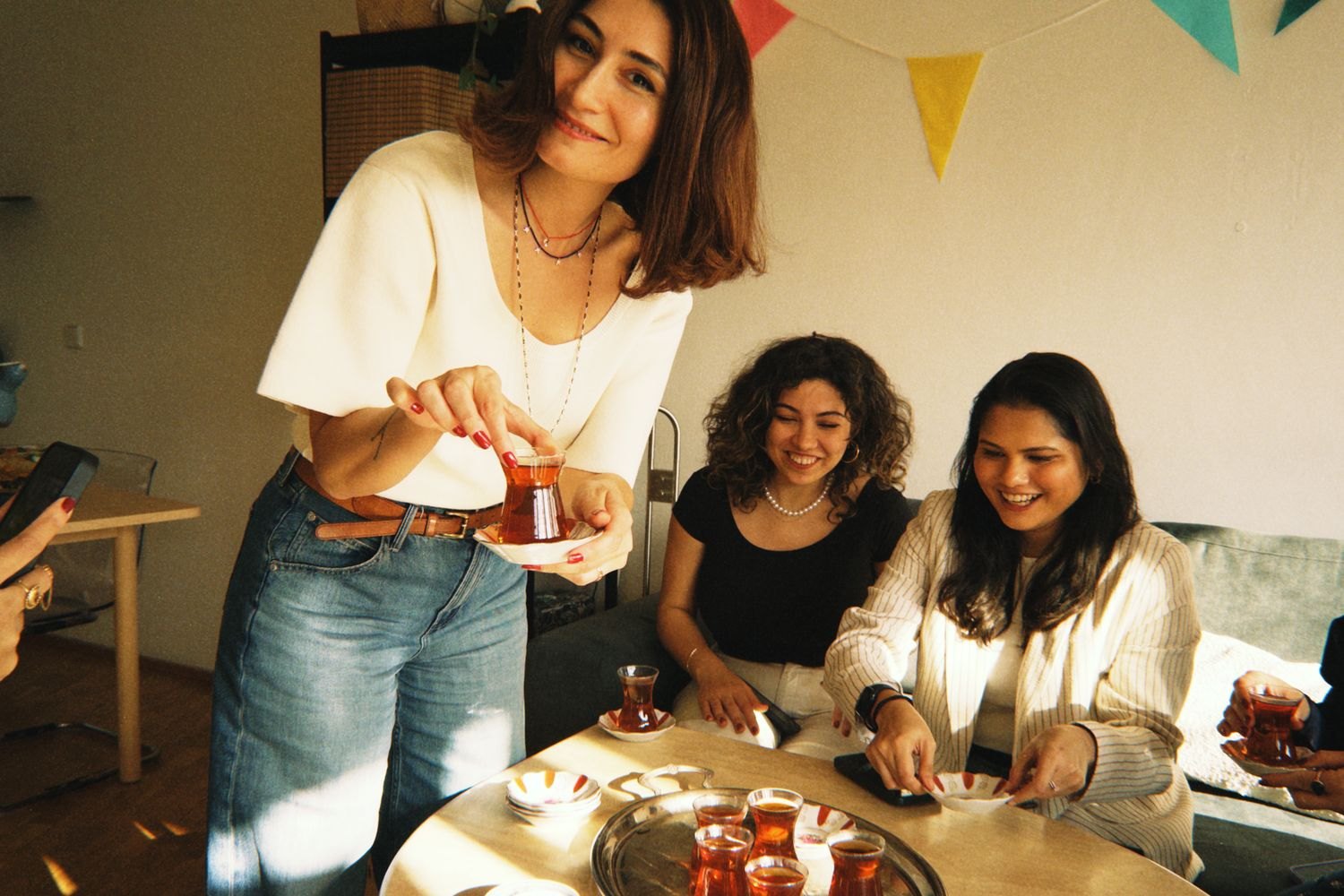
A quiet celebration need not be uneventful. Conversation and small shared activities can provide its shape without continuous music or a packed programme. Explain the intended atmosphere in the invitation and arrange the space to support it.
Describe the expectation concretely
For example, say that you are planning a small afternoon with tea, conversation and an optional drawing activity. This is clearer than simply calling it cosy. Guests can then judge whether and how they would like to participate.
Give the start, approximate finish and practical access information. Particular requirements can be discussed beforehand. Avoid promising an entirely stimulus-free environment; describe the elements you actually intend to provide.
Offer an activity alongside conversation
A shared map of imaginary places, a small jigsaw or captions for your own memory pictures can provide a quiet focus. Choose something that tolerates interruptions. A complicated task under constant time pressure is less suited to a conversational gathering.
Set out materials so guests can begin without a lengthy explanation. Show a simple example and leave people free to draw, write or contribute ideas. Do not turn results into a competition unless that is explicitly wanted.
Arrange seats so that people can converse without shouting across the room. An additional seat slightly apart may provide a useful short break if space allows. Do not describe it as guaranteed silence if sound still reaches it.
Keep the sequence flexible but recognisable
One possible sequence is arrival, a shared drink, a brief optional activity and open conversation. There is no need to announce a minute-by-minute schedule, but a clear transition helps guests know whether anything further is expected.
Signal the ending warmly and allow time to finish things already started. An activity that worked well can continue at another gathering. A quiet celebration does not require an artificial climax to end satisfactorily.
Allow a break without another task
If conversation develops naturally, the prepared activity need not interrupt it on schedule. Ask whether it fits now or should be offered later. Equally, a quiet moment can remain without immediately being filled with music. Hosting here is more about keeping options available than visibly organising every minute. Guests should be able to pause an activity and return without feeling that they have disrupted a carefully staged programme.