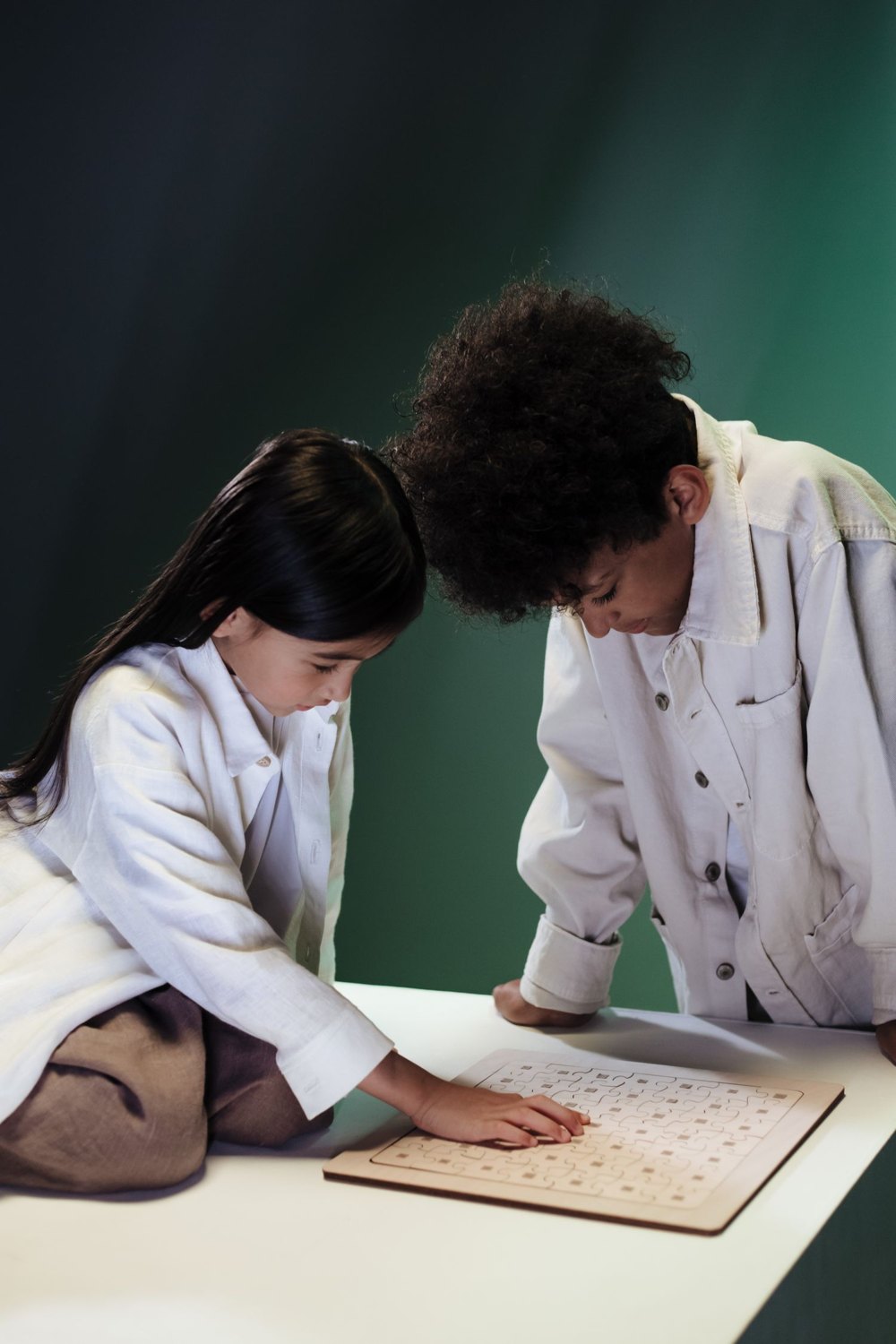
A shared jigsaw evening can be quiet without everyone doing the same task continuously. The picture and working surface influence the session more than the piece count alone. First decide whether the puzzle should be finished in one evening or can remain in progress.
Choose the image as a working landscape
A picture with distinct areas offers several starting points: a coloured door, a tree, lettering or a clear sky boundary. Large uniform areas can require more patience. That does not make an image inherently easy or difficult; the group’s experience and preferences matter too.
Check the finished dimensions and allow space for loose pieces. A board can help if the table will be needed for something else. It must actually support the unfinished puzzle, so test moving it before assembling a large area.
Share the work without owning territories
Sort in whatever way helps the group: conspicuous colours, shapes or picture areas. Everyone does not have to search for edge pieces simultaneously. One person can assemble a detail while another supplies likely pieces.
Agree that started areas can be developed collaboratively. If someone particularly wants to solve a difficult section themselves, they can say so. Unspoken ownership of part of the image is more likely to create friction than the puzzle itself.
Try pieces without force. If a fit is not clear, return the piece and compare both picture and outline. Forcing a connection creates additional troubleshooting later.
Accept a satisfying stopping point
Choose a visible stopping point, such as connecting two picture areas. If attention fades, the evening need not continue until the final piece. Photograph the progress or cover the surface appropriately where this can be done safely.
Keep loose pieces together and separate from other projects. Responsible adults should arrange suitable storage around young children or pets. Restarting is easier when the reference image and sorted areas stay together, rather than beginning with a search for missing pieces.