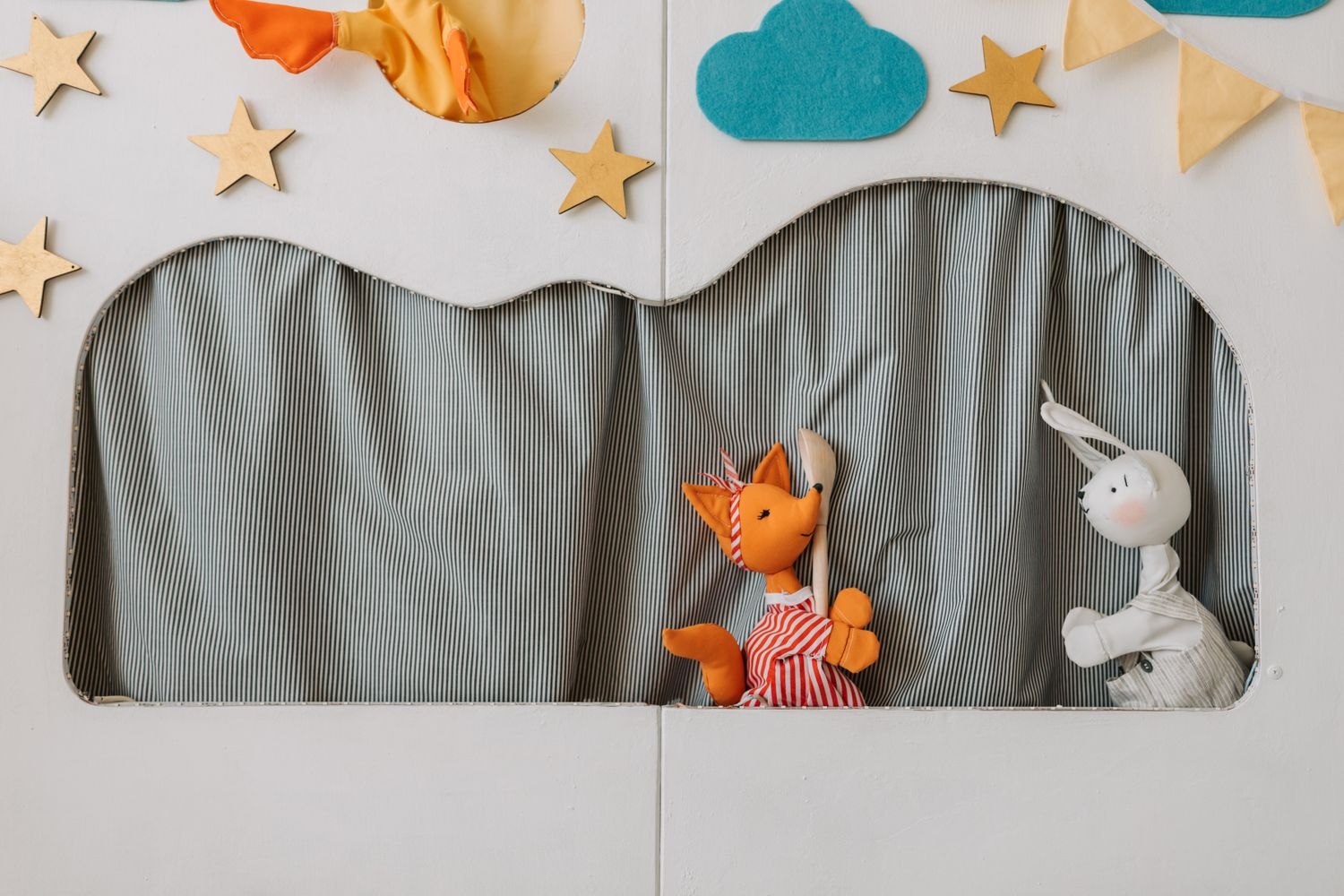
A puppet story does not need many characters to feel lively. Two different wishes are often enough for a short scene. What matters is that viewers can recognise who is acting and what changes between the beginning and the end.
Choose a small problem
For example, one character wants to prepare a celebration while the other mistakes the intended box for something else. This can produce a misunderstanding, an explanation and a shared solution. Keep the conflict simple enough to describe in a few sentences.
Use suitable puppets you already have or simple figures of your own. Match the story to their movement possibilities. If a hand puppet cannot grip objects, the plot need not depend on carrying complicated props.
Organise movement and voice
Give the speaking character a recognisable small movement while the other listens more quietly. This clarifies the exchange without requiring completely different voices. Continuous exaggerated movement can obscure what matters at a particular moment.
Rehearse a brief dialogue slowly at first. Leave a moment after a question before the reply. With several performers, agree on entries through words or visible movement rather than all starting to speak together.
Check the stage from audience height. A table edge, cloth or existing puppet frame may be enough if everything is stable and suitably arranged. Performers should be able to stand or sit comfortably; a tiring posture makes the scene harder to deliver.
Make the ending visible
Resolve the original problem through an action. The box might be moved together to its intended place, or both characters agree on its use. Simply saying “And everything was fine” does not replace that moment.
After a first performance, viewers can say when they understood the misunderstanding. If that happened late, add a clearer clue at the beginning. For another round, someone can suggest a different resolution. The same basic story then changes without requiring new characters and scenery every time.