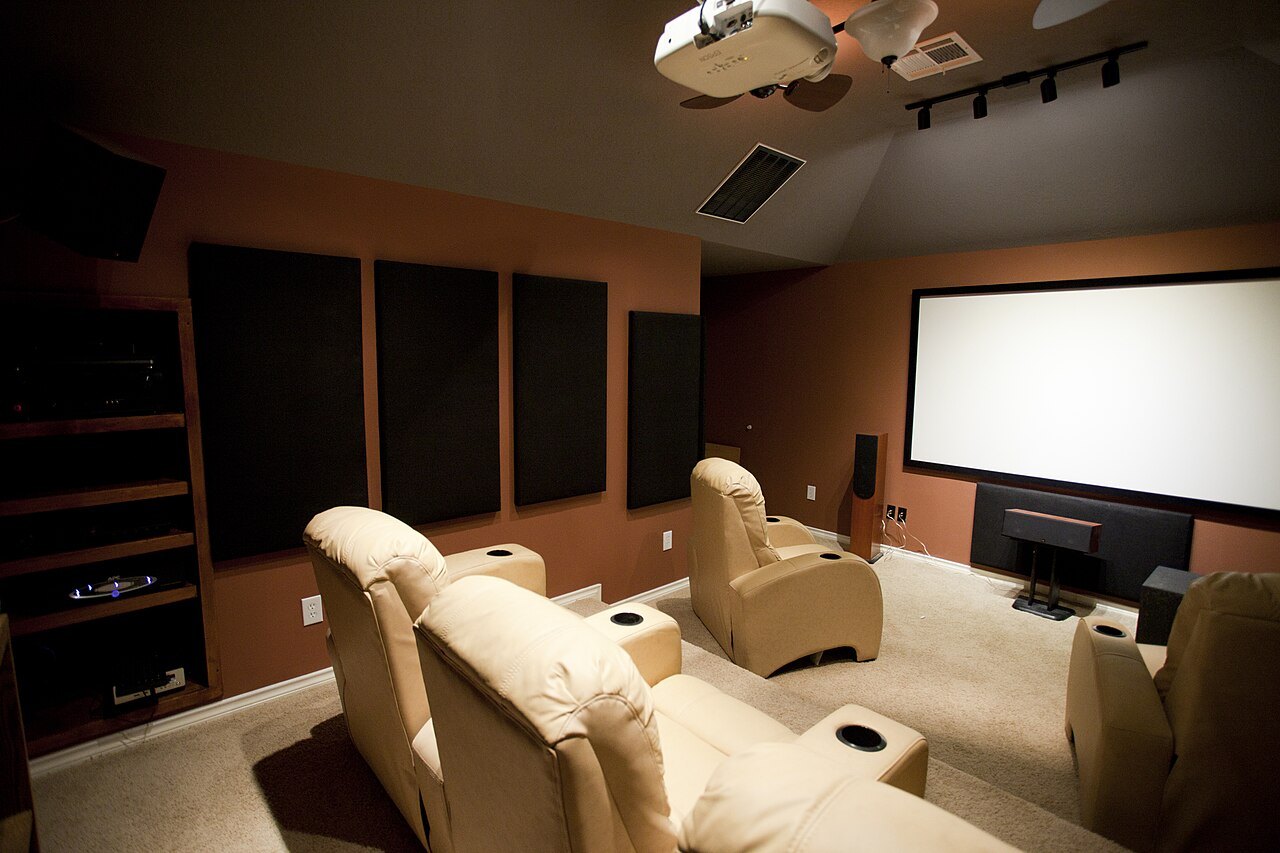

A light-coloured wall may be enough for an initial projection trial. Whether it works permanently becomes clearer with ordinary scenes viewed from the actual seats. Texture, flatness and colour can influence the picture. A projection screen offers specified properties but must itself match the projector, room and viewers' angles. Its product name alone does not settle the comparison.
Test the wall using quiet images
Project a bright uniform field, followed by a scene with fine lines or subtitles. Can you see plaster texture, unevenness or colour patches? Check from the seat, not only close to the wall. Some textures barely register there, while others become more apparent because of the direction of projected light.
Look at straight image edges too. Focus adjustment cannot fully correct an uneven surface. If parts of the image appear different, inspect placement and surface before assuming a projector fault. Change only one part of the arrangement at a time so the cause remains traceable.
Read screen properties as a combination
Manufacturers distinguish materials by properties such as gain, viewing angle and suitability for particular projection arrangements. Gain is not simply a universal quality rating. More directional reflection can favour one angle while making other seats look different. Compare the whole seating group rather than only the centre.
Ambient-light-rejecting materials depend on light direction and projection geometry. A surface intended for a particular short-throw arrangement is not automatically suitable for every projector. Check explicit material compatibility. Such a surface does not make directly troublesome lighting irrelevant.
Where possible, inspect a material sample under your room conditions. A sample does not, however, demonstrate the eventual flatness or tension of a large retractable screen. Mounting, space and everyday handling therefore also belong in the choice.
Make the comparison fair
Use the same image size, scene and lighting when comparing surfaces. A smaller picture may look brighter for reasons beyond material alone. Initially keep projector settings unchanged and assess faces, text and dark detail. Then decide which difference is genuinely visible and useful in everyday viewing.
A wall may remain a sensible temporary solution while you establish the final image size. Choose a screen once size, position and projection type are reasonably clear. This avoids continually compensating for an unsuitable format through digital adjustments elsewhere in the system.