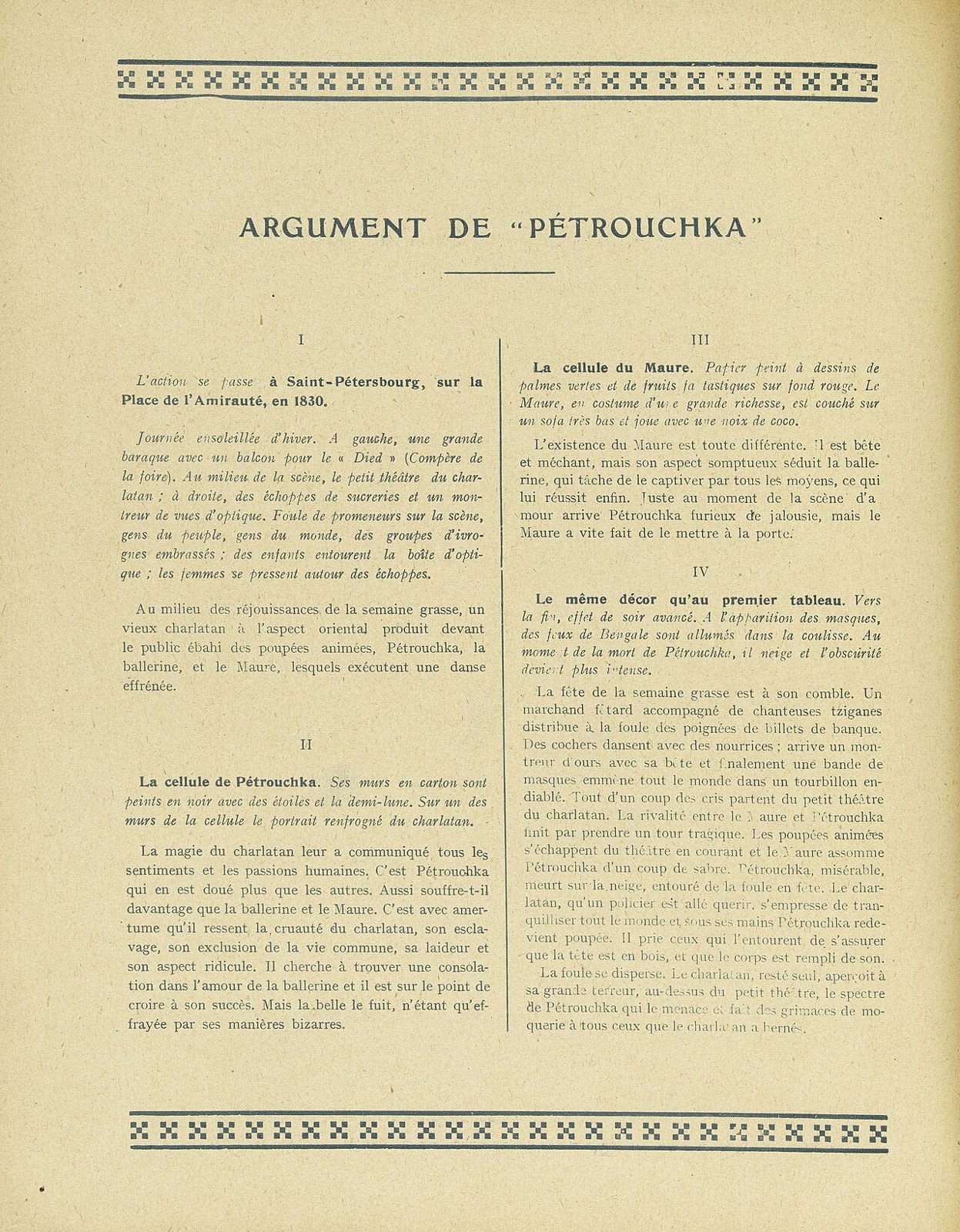
A programme may combine cast information, the running order, background essays and images. You do not need to read it from cover to cover before the lights go down. Depending on your interests, it can serve different purposes before and after a performance.
Find your bearings beforehand
First look for details that clarify the sequence: who is performing, which parts follow one another and where are the announced intervals? For a narrative work, a character outline and brief starting situation can help. Skip a full synopsis if you want to preserve surprises.
Distinguish information about the production from general writing about the work. A historical essay does not automatically explain every choice in the current staging. An interview also offers one participant’s perspective rather than determining your eventual response.
Follow specific questions afterwards
Perhaps a staging choice puzzled you or a combination of instruments surprised you. Read the relevant section then. A question arising from your own observation makes background writing more tangible than trying to learn everything beforehand.
Compare description and perception without automatically dismissing either. A text may explain a production’s intention; whether and how that intention became visible to you remains your own observation. If useful, record the two separately.
For casting, check any additional venue notices. A printed list may be supplemented by a late replacement announcement. When recording a name afterwards, refer to the performance you actually attended rather than only a general production page.
Keep a compact record
Add the date, venue and one sentence of your own on a separate note. The programme then becomes more than a collection of other people’s writing. A ticket alone rarely recalls which scene stayed with you.
If there is no printed programme, publicly supplied information can provide the same orientation. Check whether a digital version is available beforehand. Reading during the performance should neither disturb others with screen light nor replace watching the stage.
Use a programme across several visits
If a programme covers several dates, mark the evening you actually attended on your own note. Add only confirmed changes. This avoids later confusing an announced cast with the one you saw. At a repeat visit, the same record can help identify specific differences rather than relying on a vague overall feeling.