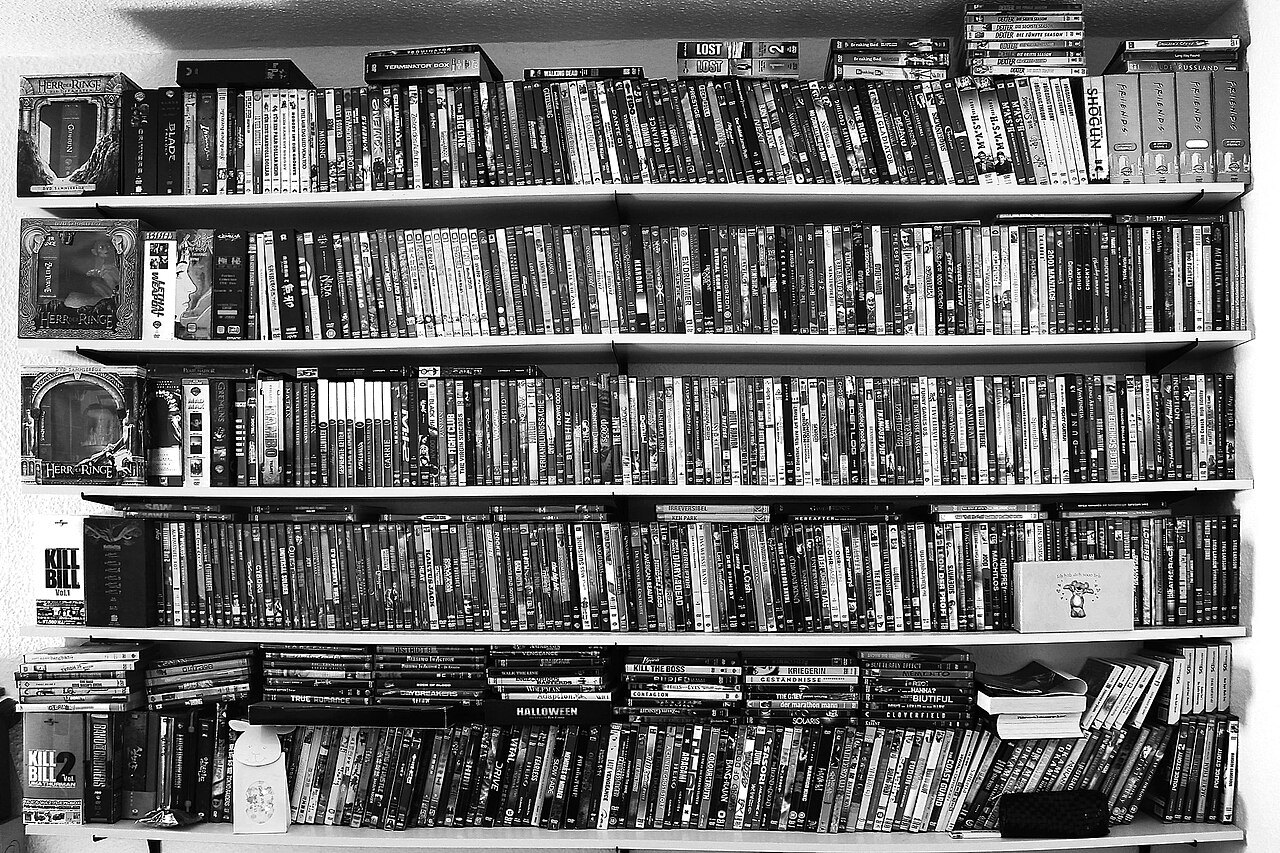

A small film collection does not need an elaborate catalogue. It needs answers to two questions: where is the film, and which edition is available? Once similar titles, remakes or multiple releases accumulate, memory may not be enough. A simple arrangement used consistently saves more time than a sophisticated system abandoned after a few additions.
Choose one primary arrangement
Alphabetical order by title works even when a film belongs to several genres. Decide once how to handle initial articles such as The, Der or Die, and remain consistent. Series and box sets can have limited exceptions, provided those exceptions remain traceable through an entry under the individual title.
Sorting by director may suit a collection usually searched that way. Genre sorting looks intuitive but can become confusing with hybrids. If you prefer it, assign each film a fixed primary location and use additional tags only in the catalogue. The same case should not migrate between categories every time the shelves are rearranged.
Record details that answer real questions
A basic table can contain title, year, format, edition and location. Add language or subtitle details when they matter to your viewing. For different cuts, record the actual edition description rather than relying only on an assumed duration. The BFI survey of alternative versions demonstrates why a title alone may not identify a particular cut.
A loaned film needs a visible note with the borrower's name and date. Keep a wish list separate so that a wanted edition is not mistaken for an owned one. For digital entries, distinguish an owned file, access through a service and a simple watchlist item. These describe different forms of availability, even if all three appear in the same application.
Protect discs and process additions promptly
Keep optical discs in suitable cases and handle them by the edge or centre hole. The Library of Congress recommends this approach for CDs and DVDs. An orderly shelf offers little benefit if loose discs are stacked together or their playing surfaces are repeatedly touched. Choose a clean, stable storage location without extreme environmental changes.
Give new additions a short routine: check the details, add the entry and put the case away. A small holding area can help, but should not become a permanent second collection. After a few weeks, review which fields you actually used. Remove unnecessary ones. The arrangement should make finding and watching easier, rather than becoming a larger undertaking than the films themselves.