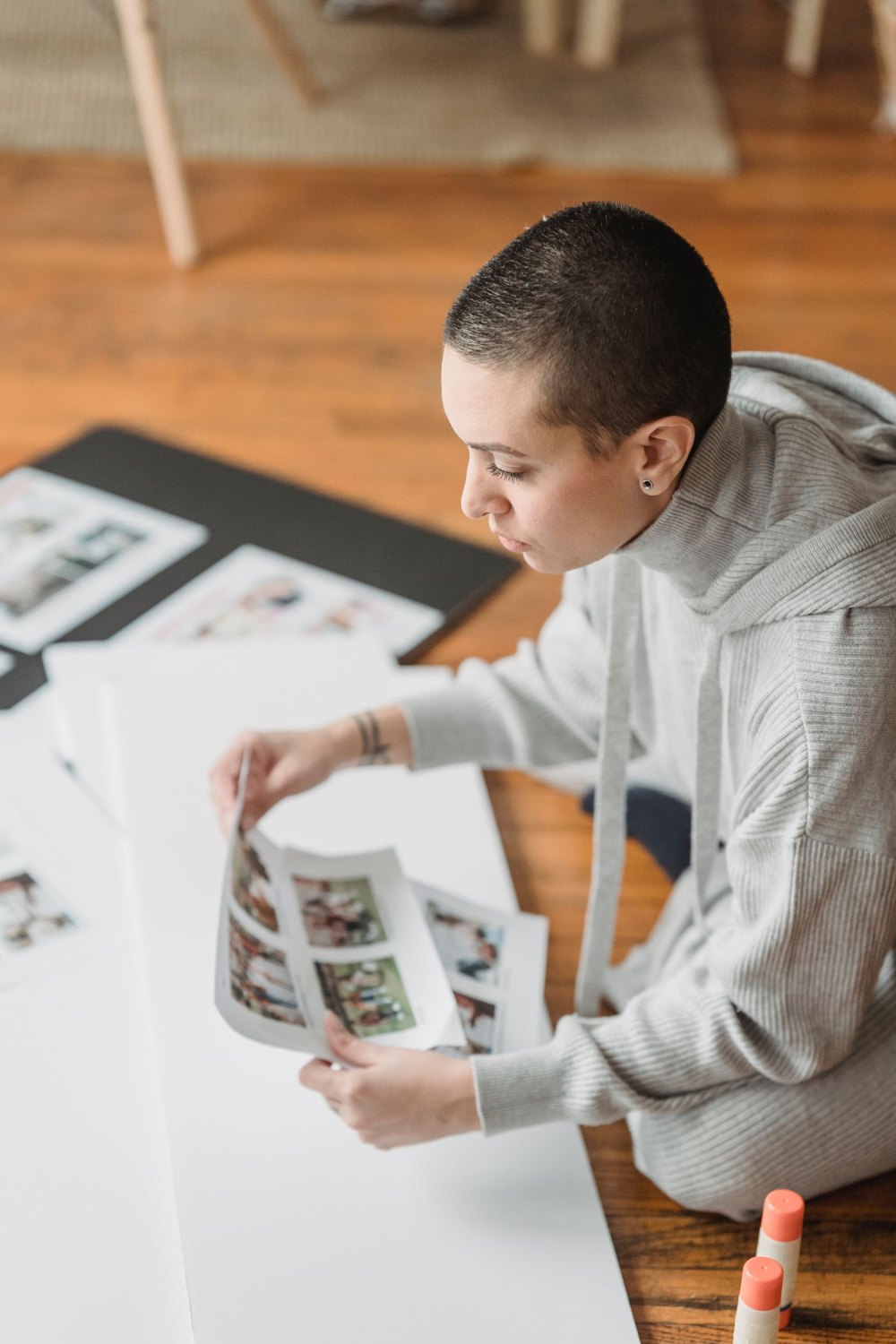
A shared evening often leaves more than a photograph: an invented sentence, a drawing or a small surprise. A memory collection becomes more personal when it preserves those specific moments. It need not be complete or document every part of the gathering.
Make a small selection together
For example, choose one picture of the result, one sentence about an unexpected moment and a small paper item from the activity. Ask participants what they would like to keep. Otherwise the host’s selection can easily represent only one perspective.
Distinguish private storage from sharing. A photograph for a personal album is not automatically intended for public publication. If someone does not want to appear, a picture of the finished map or game materials can carry the memory instead.
Write down the context
Add the date, occasion and a short description. “The bridge was made from three boxes” says more later than an unlabelled photograph of unidentified cardboard pieces. Keep the wording close to what actually happened.
If several people contribute a sentence, different memories can coexist. One person may remember the puzzle while another recalls the conversation afterwards. There is no need to turn these into one official account.
For drawings, add titles or the invented characters’ names if participants want this. Do not automatically keep every sheet. A deliberate selection remains more accessible than an ever-growing unorganised stack.
Choose a format you can maintain
A simple envelope per gathering, an album or an organised digital folder may be enough. Choose according to the materials and your habits. Give digital files understandable names and appropriate backups; one phone alone is not a long-term organising method.
Look through the collection together occasionally if people are interested. It may suggest new ideas, such as continuing a story. Memories need not determine every later activity, however. They preserve an earlier evening while leaving room for new forms.
Photograph an outcome rather than everyone
After a shared drawing activity, one clear photograph of the finished map may be enough. Add a sentence explaining how a particularly unusual place name arose. This preserves the shared action without needing a series of portraits. Before sharing, still check whether the image includes names or other information that should remain private. A memory can be specific and meaningful without documenting every participant’s appearance.