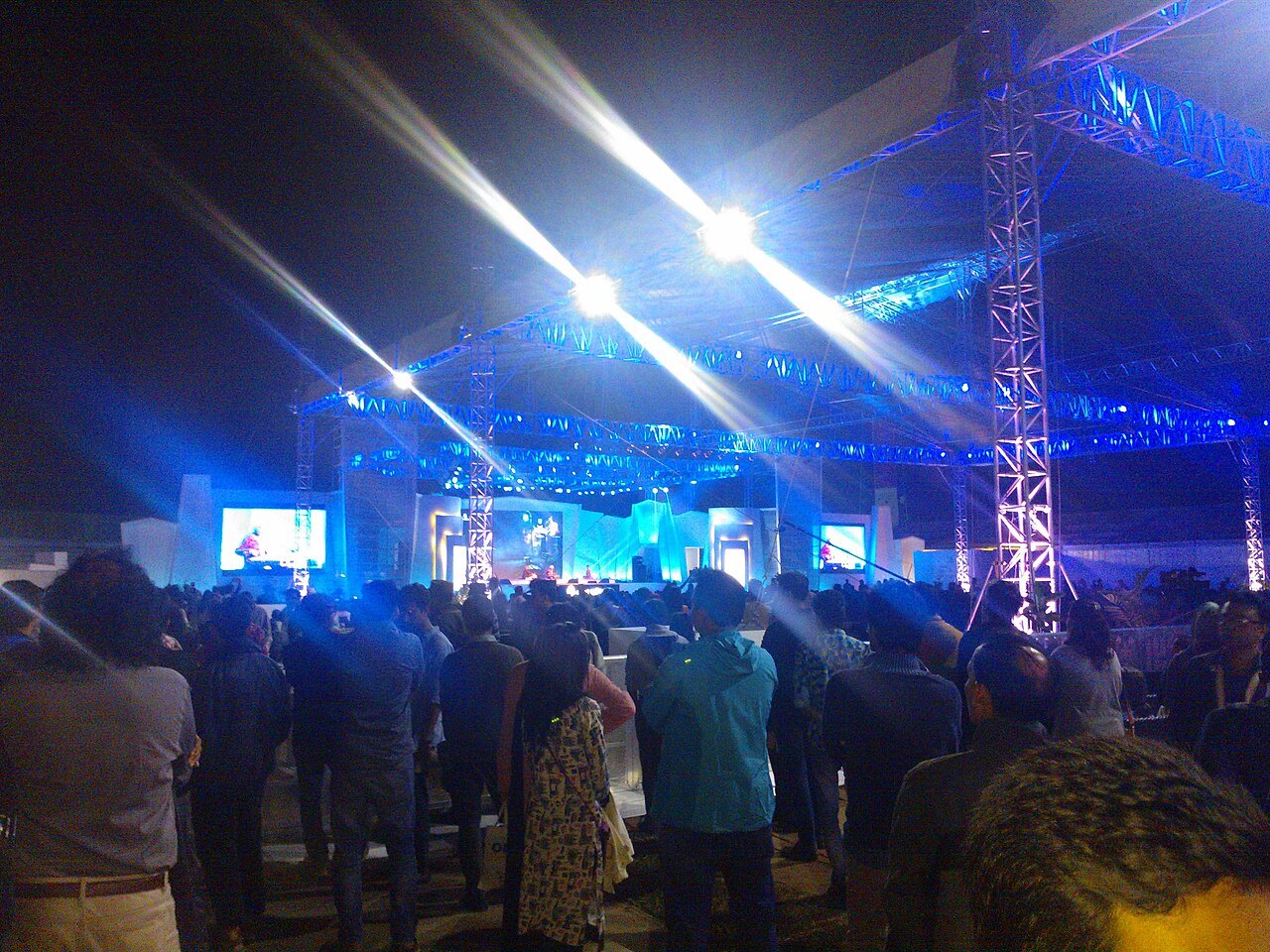

A festival timetable can look seamless on screen yet fail on site. Stages are separated by walking routes, other people and sometimes separate access areas. Plan the transitions between performances as well as the performances themselves.
Choose three priorities rather than collecting everything
First mark a few performances that matter most to you, then add optional items. If two favourites overlap, decide beforehand whether switching is worthwhile or whether you prefer to experience one complete performance.
Half a set at each stage can mean much walking and little attention. That is not inherently wrong, but it should be a deliberate choice. For each fixed item, record the stage and announced time rather than only the performer’s name.
Read the map as a route plan
Locate entrances, toilets, water points where marked and useful meeting places. Check whether particular areas have separate access conditions. A straight line between stages is not a reliable walking route; fencing and crowd management may require detours.
Use official site maps and current organiser information. A previous year’s map may show a different layout. For required step-free routes or particular access arrangements, consult the relevant event information.
Leave flexibility between two important performances. A changeover that works only with an immediate departure and an empty route is vulnerable to every delay. A break in a suitable place can contribute more to the day than another tightly scheduled item.
Agree on a shared basic plan
A group does not have to watch everything together. Agree on when and where to reunite, with an alternative meeting point if an area becomes inaccessible. Do not rely exclusively on messages that may arrive late when reception is weak.
Keep essential details available without a connection. On site, check official updates and announcements. A saved plan remains a working version rather than a replacement for current organiser instructions.
Include the end in the day’s plan
Check the route from your final performance to the exit and onward transport. Finishing at the farthest stage may create different demands from leaving earlier near the exit. If you need a fixed connection, decide in advance which performance fits that constraint. The final hour can then remain part of the experience rather than becoming an unplanned rush.