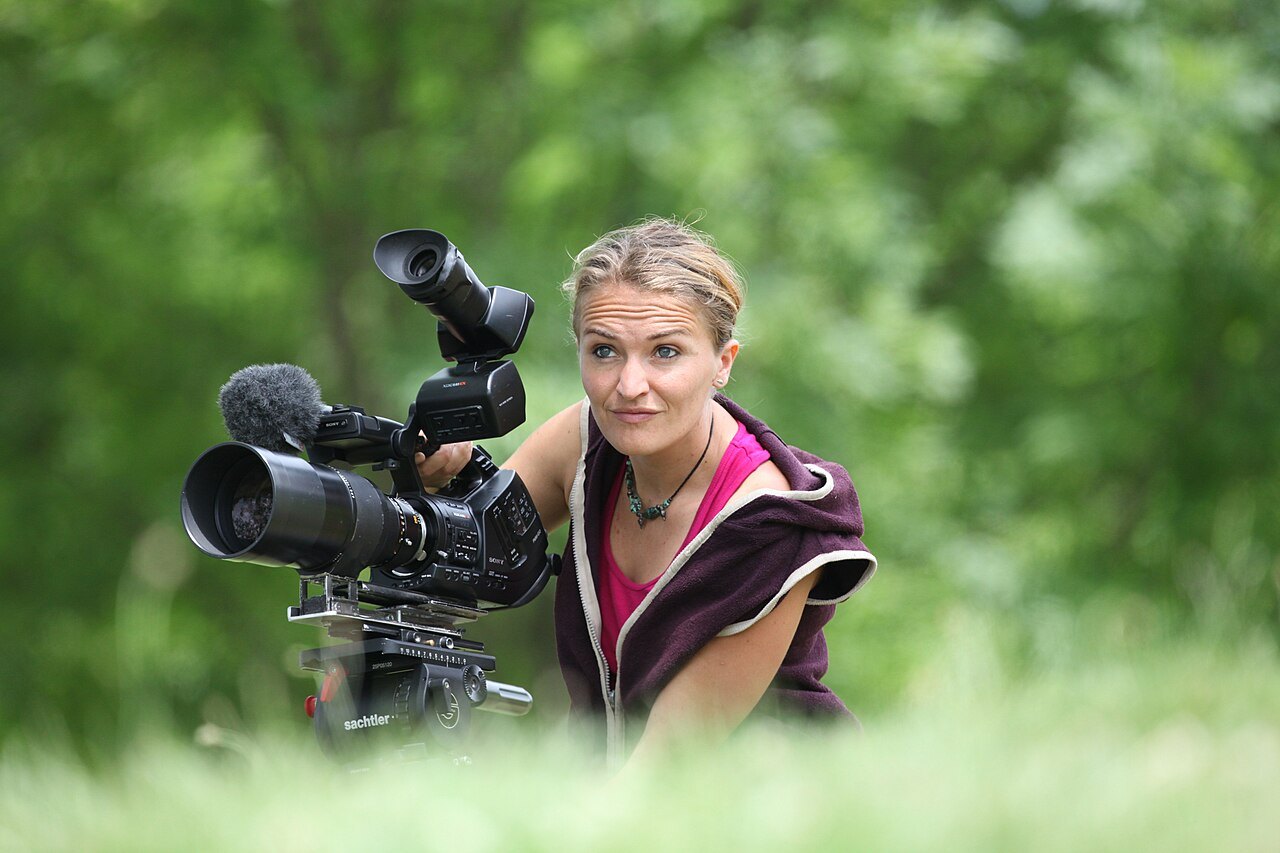

A documentary works with reality, but not without selection. Camera placement, interview questions, sequence and sound determine which portion we encounter. That does not make every account arbitrary. It means two questions can be asked together: what do we learn about the subject, and how does the film make that information understandable? Attentive viewing requires neither automatic suspicion nor unquestioning agreement.
Identify the kind of statement
Someone may describe a personal experience, explain a specialist issue or offer a hypothesis. These contributions have different scopes. Ask what supports a statement and whether the film identifies the speaker's role. A powerful memory is not automatically evidence for every detail of a wider historical event.
Images also serve different purposes. A present-day view of a house can identify a place without proving what happened there decades earlier. Archive footage may be contemporary with an event, but it must also match the claimed location and occasion. Reconstruction can clarify a process when it remains identifiable as reconstruction. Vividness and direct witnessing are different things.
Notice the selection made through editing
The BFI's discussion of documentary editing describes its substantial role in building a story from material. Connections between statements are particularly worth watching. A sceptical expression placed after a sentence may appear to be an immediate response. Sequence alone does not establish that the two moments originally belonged together.
You need not suspect manipulation at every cut. Instead, ask what claim the connection creates. A landscape shot between interviews may simply provide a transition. If used as evidence of a particular condition, it requires more context. Commentary, captions and surrounding material determine its role.
Distinguish evidence from accompanying illustration
Suppose an interview describes how a neighbourhood changed over twenty years, accompanied by footage of a crowded street. The image may illustrate the account, but alone establishes neither the earlier situation nor the claimed development. That requires a date, location and a meaningful comparison. Notice whether the film supplies those details or whether you add them through the immediate pairing of statement and image.
An archive photograph presents a similar issue. A visible crowd establishes the presence of those people at the photographed moment. It does not independently explain how representative the event was, why they gathered or what happened beforehand. Commentary may supply that information, but remains an additional source. A conversation can simply distinguish the levels: the photograph shows a gathering, while the narration assigns it an occasion. If that occasion is essential to the argument, checking the stated provenance becomes worthwhile rather than treating the photograph as proof of every accompanying claim.
Follow up one specific number
After viewing, select one central, checkable claim rather than trying to verify everything simultaneously. For a number, ask about period, population and source. “Twice as many” remains incomplete without a baseline and comparison. A source name on screen provides a beginning, not a substitute for reading the actual research being cited.
Distinguish circumstances during production from subsequent developments. An older documentary may accurately describe its own period even when today's figures differ. A forecast is likewise not the same as an outcome that has already occurred. Keeping those time frames separate prevents hasty conclusions in either direction.
Discuss perspective and missing information
Consider who speaks and who is only described by others. An absent perspective may reflect limited access, deliberate concentration or another reason. Identify the gap first without inventing its cause. A film with a tightly defined viewpoint can still be valuable when the limits of that viewpoint are understandable.
For discussion, make two separate notes: something you learned and a question that remains open. Add a scene that strongly influenced your response. This helps distinguish information from emotional construction without treating them as enemies. A compelling film can move its audience while its factual claims remain open to examination.