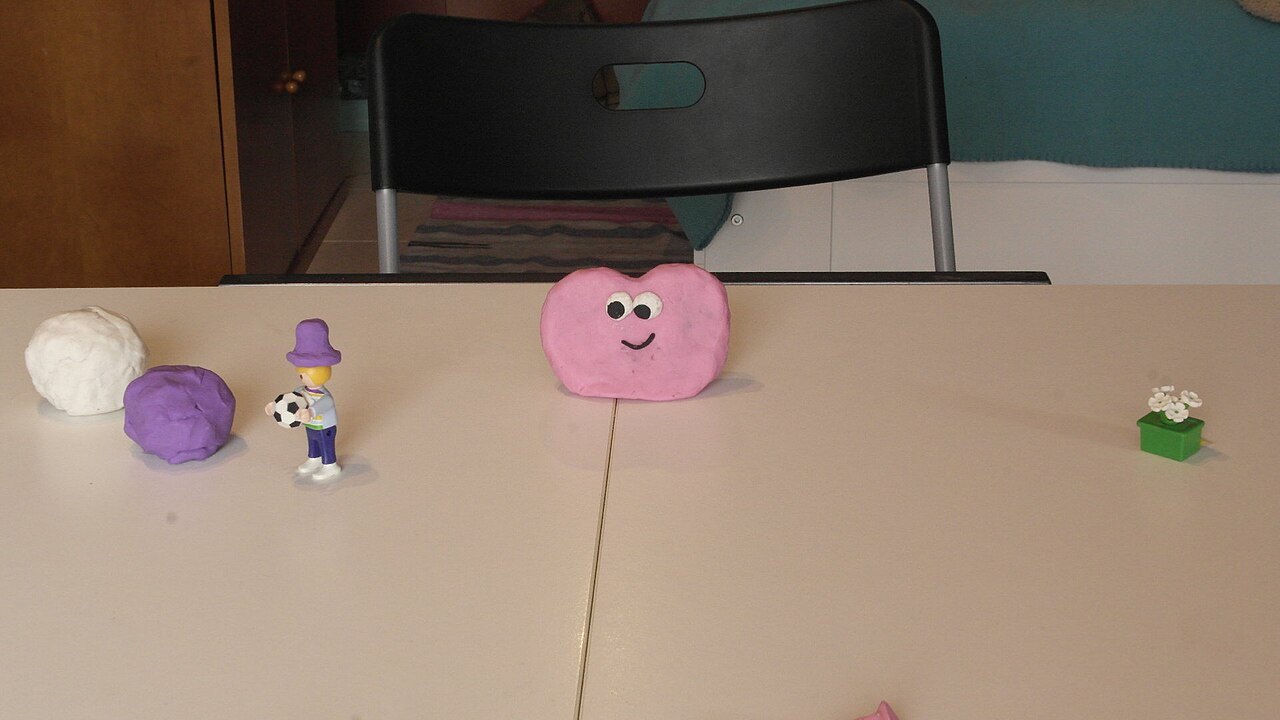

Animation is not simply one particular style of character design. A drawn person, a paper shape, a puppet or an abstract line can all be animated. Nor is the audience automatically children: subject, tone and complexity need to be considered for each work. To discover different approaches, pay as much attention to the movement as to the figures' appearance.
What changes between images
Drawn animation creates movement through successive image states. Stop-motion instead changes physical objects or puppets between individual photographs. Cut-out animation uses moving flat pieces. Digital methods can work with two-dimensional forms or spatially modelled characters. Completed films may combine these approaches.
The NFB's collection on animation techniques also presents methods such as pixilation and pinscreen animation. It demonstrates how far the field extends beyond familiar cartoons. You do not need to identify every technique confidently at first. Ask what material appears to be present and what kind of change produces the movement.
Compare one small action
Imagine a ball falling onto a table. In a drawing it may deform dramatically; an animated solid ball may retain its shape while conveying weight through acceleration and brief pauses. Both can feel convincing without precisely imitating a live-action recording.
Notice how a movement begins and settles. Does everything stop simultaneously, or does one part follow slightly later? A coat, ear or shadow can carry the main action onwards. Deliberate simplification is not necessarily a technical deficiency. It may concentrate attention on a gesture or rhythm.
Material appearance is not proof of method
A digital image can imitate paper, clay or brush marks. Conversely, a physically made animation can receive digital treatment. A still therefore does not always reveal the complete process. When naming an exact technique, consult production information or a documented account of the work.
Two short works with distinctly different movement may be enough for a small viewing session together. Afterwards, discuss a particular moment as well as the story. How did hesitation, weight or surprise become visible? Animation then emerges as the shaping of time and change. Questions about technique offer an additional perspective rather than reducing the film to the way it was manufactured.