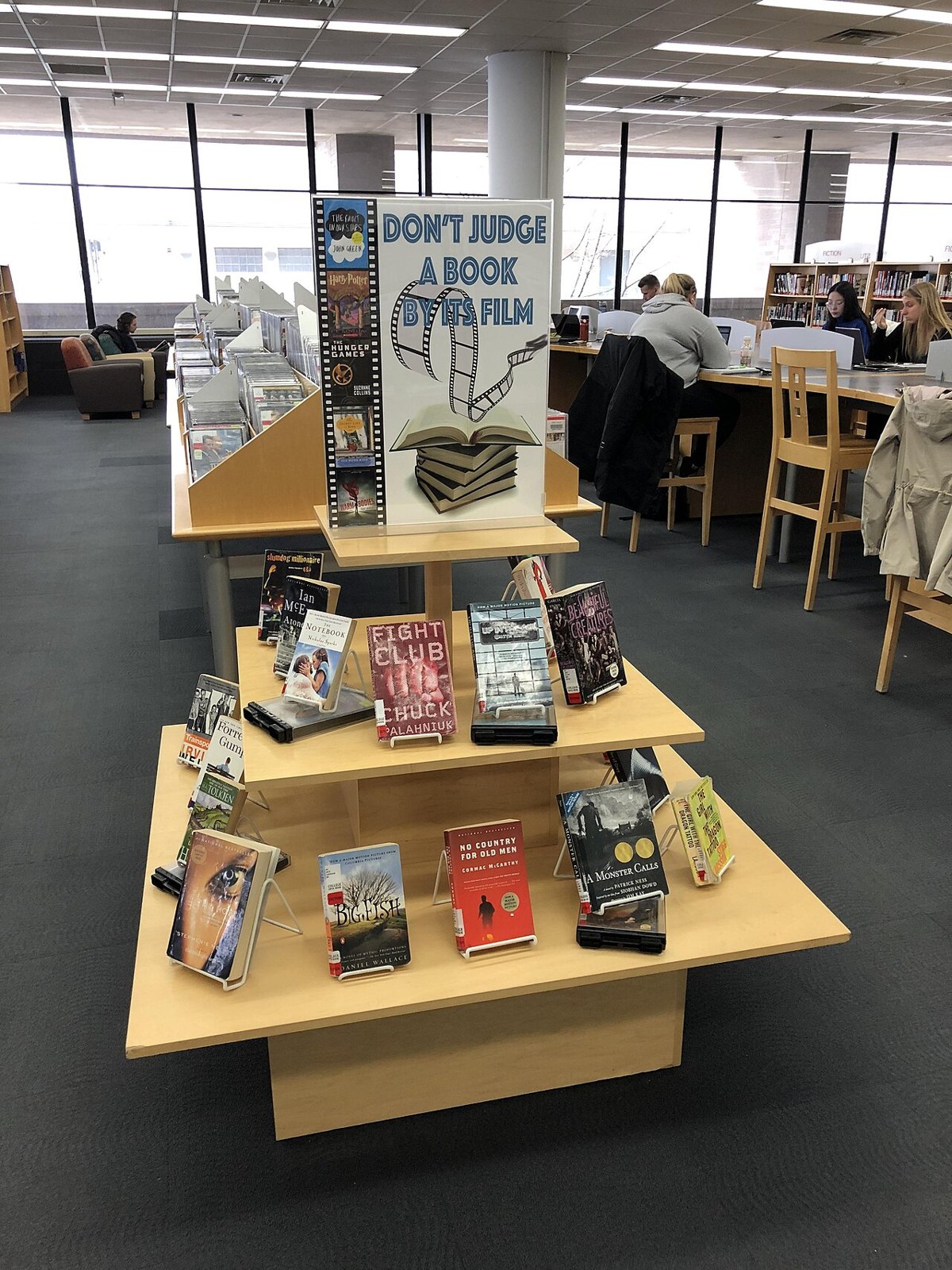

After watching an adaptation, it is easy to say that the book was different. That can begin an interesting observation, but it says little by itself. A novel conveys thoughts, time and space through different means from a film. Comparing them becomes more rewarding when you focus on a particular storytelling task: how, for example, do we learn that someone distrusts a friendly offer?
The same task can use different means
In a novel, a passage of thought might explain why an invitation seems suspicious. A film could convey uncertainty through a delayed reply, a glance at a locked exit or an unusually polite voice. These are imagined possibilities, not a universal recipe for adaptation. What matters is the choice made in the scene before you.
Select a short passage you know well and describe its function in one sentence. Then examine how the screen scene fulfils or changes that function. Losing an interior monologue need not remove the conflict. Conversely, retaining every word can still shift the emphasis if another character dominates the image.
Omissions have consequences beyond loss
A subsidiary story may disappear or be transferred to another character. First ask which relationship or piece of information receives a different weight as a result. A decision might seem more abrupt because its preparation has gone. Alternatively, an already clear motive may no longer receive a repeated explanation. These consequences offer more to discuss than the number of missing chapters.
Your own order of discovery matters too. Reading the book first creates imagined rooms and voices. Record a disappointed expectation if you wish, but separate it from whether the film makes sense on its own terms. A setting that differs from the one in your mind does not by itself demonstrate an unsuccessful scene.
Test a change of perspective
Imagine a novel passage in which a host describes a visit as successful while small remarks reveal that she has missed her guest's dissatisfaction. One screen version could remain on her face, letting us hear the guest without seeing them. Another could repeatedly show the guest's reserved reactions. Both might retain the dialogue while distributing knowledge differently. The second exposes a contradiction earlier; the first holds us closer to the host's limited perception.
Ask not only whether words survive, but whom the audience knows more than, and when. An omitted description may be replaced by a reaction; an added scene may resolve an ambiguity the novel preserves. This consequence can be named before deciding which version you prefer.
Then examine what precedes the passage. If the film has already introduced information revealed later in the book, an apparently faithful scene may still perform a different function. Close comparison sometimes therefore needs more than one paragraph and its immediate screen counterpart. The knowledge brought into the scene is part of the comparison too, and can explain why identical words carry a different weight.
Identify the versions precisely
Check the titles, dates and creators of the works being compared. Several films can draw on the same book without every later film being exclusively a remake of the earlier one. In his BFI interview about Rebecca, Ben Wheatley explicitly describes returning to the novel as his starting point. Such statements help establish context without replacing observation.
Finish with a specific shift: the novel lets us share a doubt earlier, while the film initially withholds the reaction. This leaves room for different preferences and makes the decision behind your response clear. Fidelity to the source can then become one question among several, rather than a score that automatically determines the value of the whole film.