An activity box is useful when its contents can quickly become something specific to do. A full container of unsorted leftovers does not automatically achieve that. Prepare a few compatible materials and add brief prompts explaining how to begin.
Plan around three possible beginnings
Choose, for example, drawing, a short storytelling round and a simple puzzle. Drawing needs paper and suitable pencils. Storytelling can begin with your own cards for character, place and problem. A puzzle might use crops from your own photographs.
Do not add every theoretically useful small object. Check whether an item contributes to one of these activities. Things without a clear purpose can remain in their usual storage location. The box should make starting easier rather than replace the entire craft cupboard.
Label compartments by function
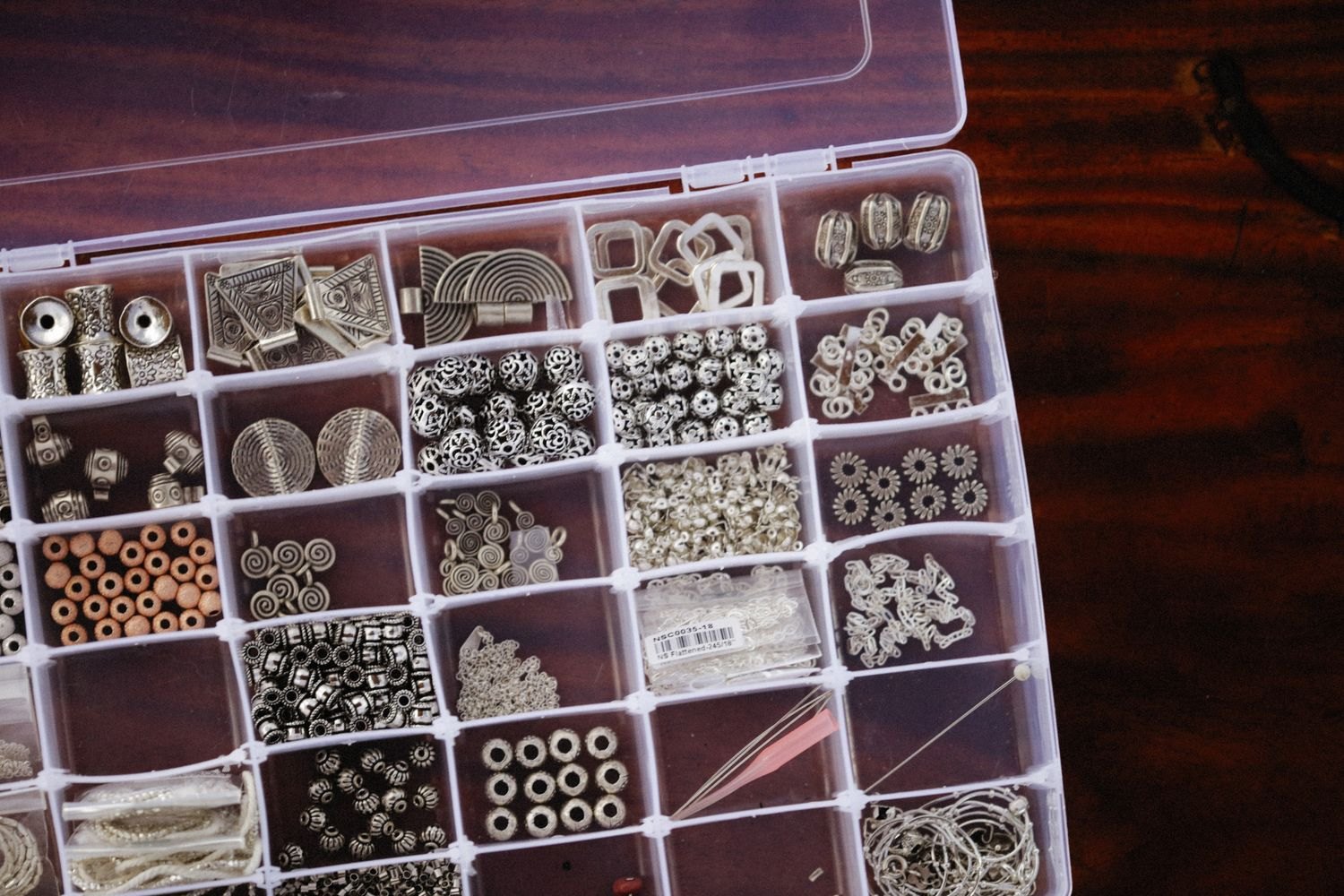
In a compartment box, writing materials, cards and suitable small craft pieces can stay separate. Larger sheets may need a folder alongside it. Label things so that other people can find and return materials too.
Check suitability for the people using the box. Small parts, tools and adhesives require appropriate selection and storage; responsible adults make these decisions for children. A spontaneous activity box does not mean unrestricted access to everything.
Add a short starter card for each activity, stating the materials, first step and a possible finish. “Draw a place card and invent three things that happen there together” is more immediately usable than a general request to be creative.
Reset briefly after use
Reassemble complete card sets and replenish used paper. Check that pens still work. This small reset determines whether the next spontaneous idea can genuinely begin quickly.
If an activity repeatedly goes unused, ask why. Its explanation may be unclear or its materials incomplete. Replace one element deliberately rather than continually filling the box. A manageable collection with three working starting points is more useful than many incomplete possibilities.